
 then 'Add to home screen'
 then 'Add to home screen'


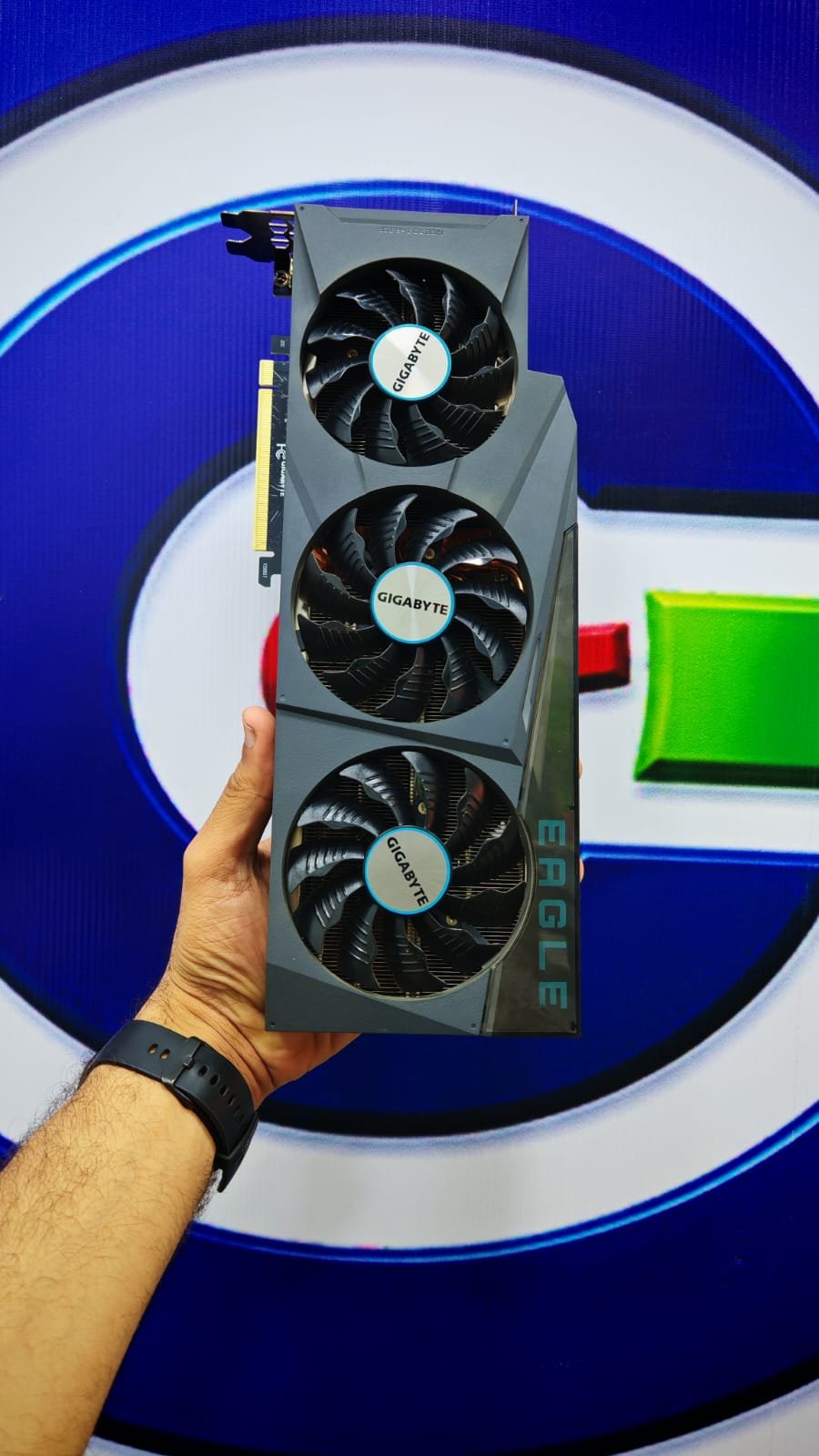




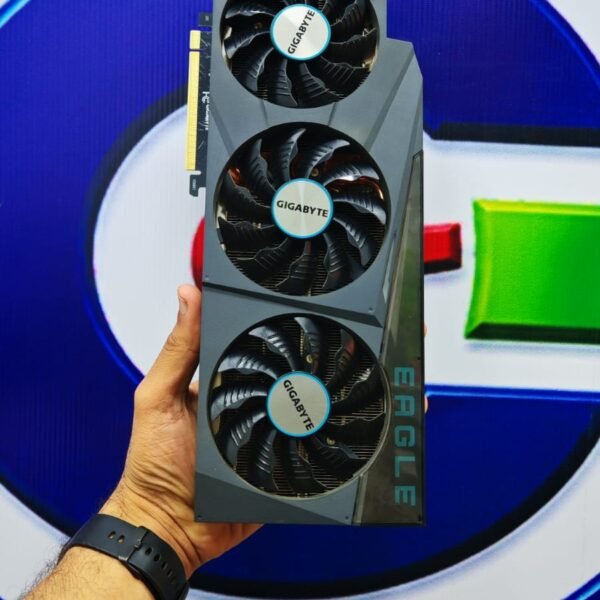
Gigabyte Nvidia GeForce Rtx 3080 10gb Gddr6X Eagle Triple Fan Graphics Card
The Gigabyte RTX 3080 Eagle 10GB delivers high-performance gaming and professional GPU acceleration through NVIDIA’s Ampere Architecture. With 8,704 CUDA Cores, 10GB of ultra-fast GDDR6X memory, and a 320-bit memory interface, it is built for Gamers seeking excellent 1440p performance and a capable 4K gaming experience.
Its 10GB GDDR6X memory operates at an effective 19 Gbps, providing 760 GB/s of memory bandwidth. This high-speed memory configuration helps the GPU handle detailed game environments, complex textures, advanced visual effects, and demanding creative workloads. The WINDFORCE 3X cooling system with three fans is designed to maintain stable temperatures during extended gaming and rendering sessions.
Technical Specifications
| Specification | Details |
|---|---|
| Architecture | NVIDIA Ampere |
| GPU Chip | GA102 |
| Release Date | September 17, 2020 |
| CUDA Cores | 8,704 |
| GPU Base Clock | 1440 MHz (NVIDIA reference specification) |
| GPU Boost Clock | 1710 MHz (Gigabyte standard EAGLE specification) |
| VRAM | 10GB |
| Memory Type | GDDR6X |
| Memory Bus | 320-bit |
| Memory Clock | 19,000 MHz effective (2375 MHz physical clock) |
| Memory Bandwidth | 760 GB/s |
| Interface | PCI Express 4.0 x16 |
| Graphics Card Power (TDP Reference) | 320W |
| Recommended PSU | 750W |
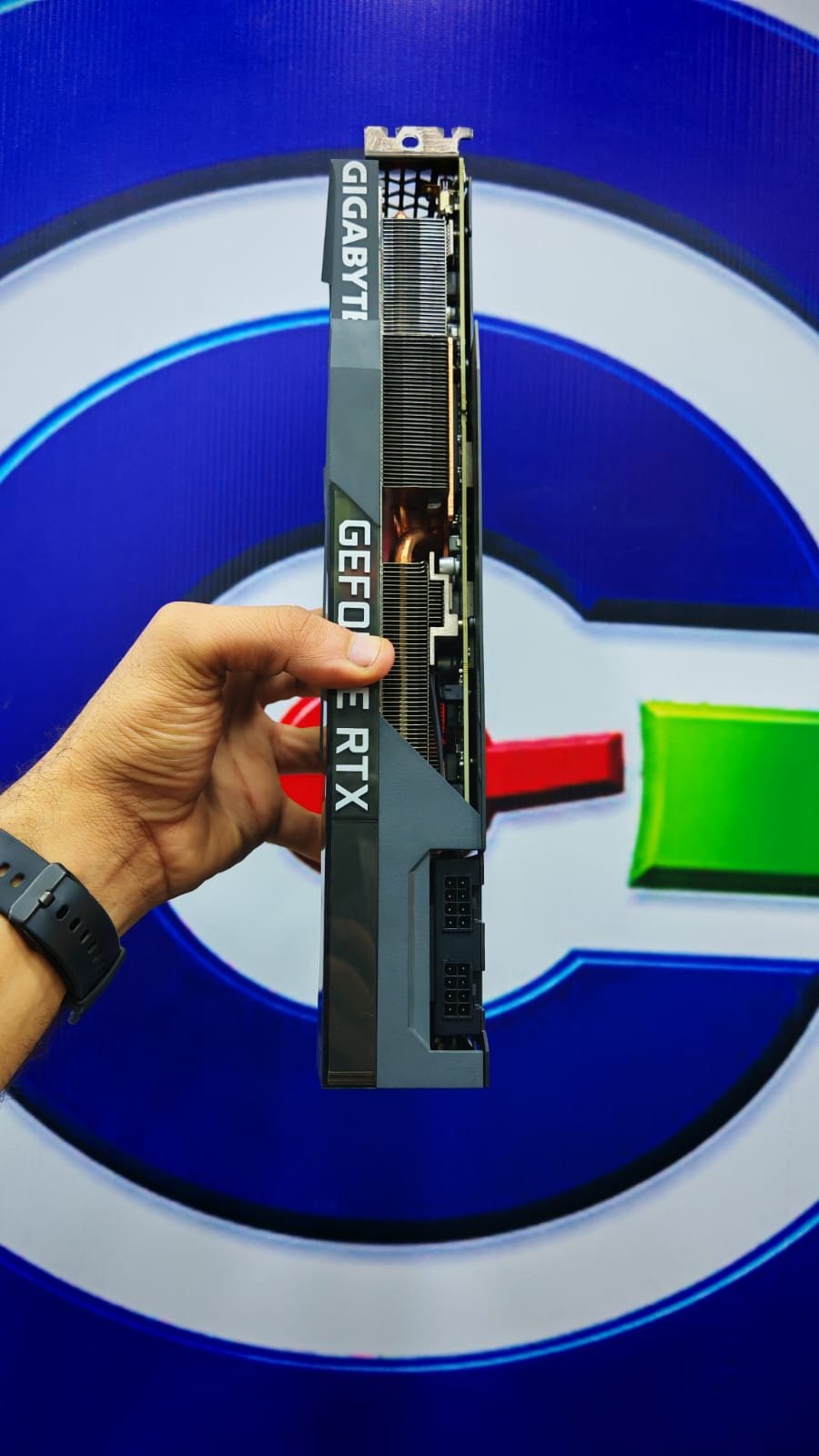
| Power Connectors | 2 × 8-pin PCIe |
| Dimensions | 32.0 × 12.8 × 5.6 cm |
| Display Outputs | 3 × DisplayPort 1.4a, 2 × HDMI 2.1 |
| Maximum Digital Resolution | 7680 × 4320 |
| Maximum Displays | 4 |
| DirectX Support | DirectX 12 Ultimate |
| OpenGL Support | OpenGL 4.6 |
Specification clarification: The 1710 MHz Boost Clock, memory configuration, dimensions, power connectors, and display outputs refer to Gigabyte’s standard EAGLE 10G model. The 1440 MHz Base Clock and 320W graphics power are NVIDIA reference specifications. The recommended PSU is Gigabyte’s stated requirement. Actual operating power and GPU frequencies can vary depending on workload, temperature, and system configuration.
Build Quality & Thermal Design
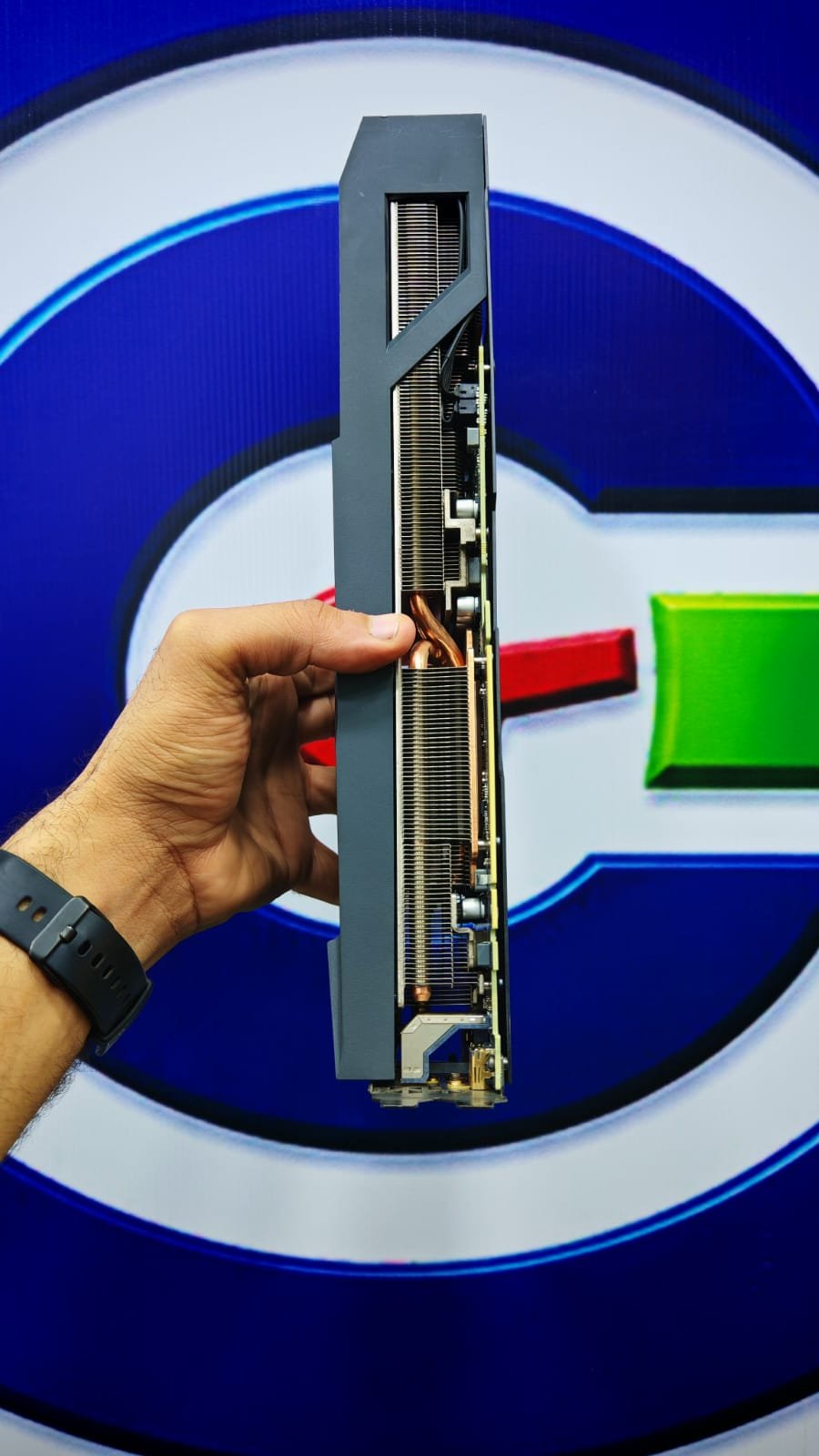
The Gigabyte RTX 3080 Eagle features a substantial triple-fan cooling assembly designed to manage the thermal demands of the GA102 GPU and its high-speed GDDR6X memory. Its WINDFORCE 3X Cooling System uses three fans with an alternate-spinning arrangement to improve airflow and reduce turbulence between adjacent fans. This design helps distribute cooling across the heatsink during extended gaming and professional workloads.
The heatsink assembly uses multiple heat pipes to transfer thermal energy away from the GPU and distribute it across the cooling fins. The extended heatsink structure also supports airflow through the card, helping maintain consistent cooling under demanding conditions. Gigabyte’s 3D Active Fan technology provides semi-passive operation, allowing the fans to stop under lighter workloads when additional cooling is unnecessary.
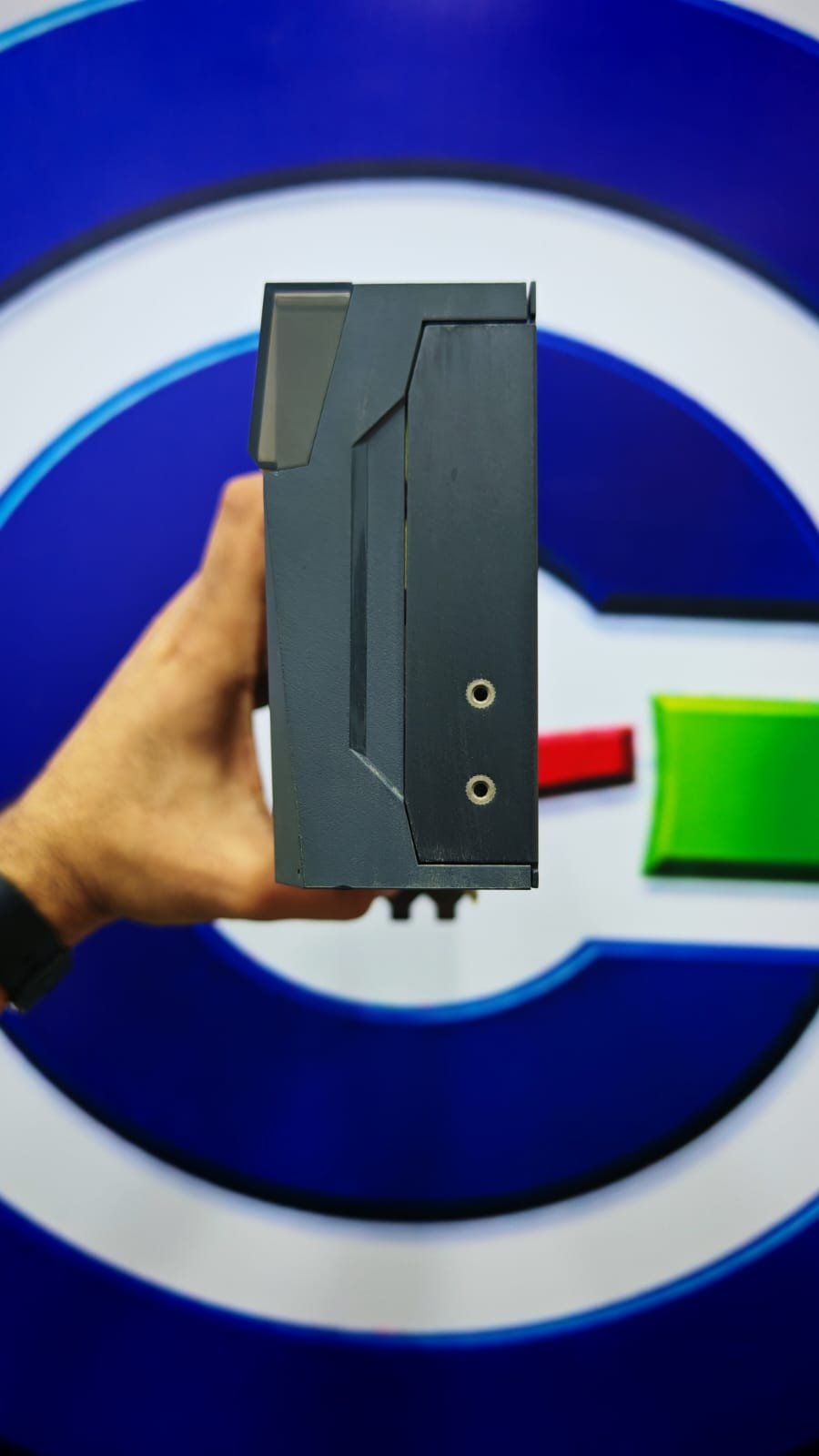
A protective metal backplate reinforces the graphics card and contributes to its solid exterior construction. The PCB and power-delivery design are engineered to support the RTX 3080’s demanding operating requirements, while the dual 8-pin PCIe power connectors provide the required power input.
The card also incorporates RGB Fusion 2.0 lighting, allowing users to customize compatible lighting effects and coordinate the graphics card with the rest of their PC setup.
With its triple-fan arrangement, extended heatsink, metal backplate, and substantial cooling structure, the Gigabyte RTX 3080 Eagle is designed for sustained gaming, GPU rendering, and other intensive applications.
Exclusive Features & Software Technologies
The Gigabyte RTX 3080 Eagle combines NVIDIA Ampere Architecture with dedicated graphics and AI-processing technologies designed to improve gaming performance and professional productivity.
NVIDIA Ampere Architecture: Ampere introduces enhanced Streaming Multiprocessors, second-generation RT Cores, and third-generation Tensor Cores. The RTX 3080’s 8,704 CUDA Cores provide substantial parallel-processing capability for modern games and compatible creative applications.
Second-Generation RT Cores: Dedicated Ray Tracing hardware accelerates calculations involving realistic lighting, reflections, and shadows. Supported games can use these capabilities to deliver more detailed and immersive visual environments.
Third-Generation Tensor Cores: These specialized processing units accelerate supported AI workloads and power NVIDIA DLSS technology. They are particularly useful for AI-assisted image reconstruction and compatible machine-learning applications.
NVIDIA DLSS: Deep Learning Super Sampling uses AI-assisted image reconstruction to improve frame rates in supported games. By rendering internally at a lower resolution and reconstructing the output, DLSS can provide a useful performance improvement while preserving visual detail.
NVIDIA Reflex: Supported competitive games can use Reflex technology to reduce system latency, helping improve responsiveness during fast-paced gameplay.
NVIDIA G-SYNC: When connected to a compatible G-SYNC display, the graphics card can synchronize display refresh behavior with GPU frame delivery to reduce screen tearing and improve visual smoothness.
NVIDIA NVENC: The Ampere-generation NVIDIA Encoder accelerates supported video encoding and streaming workflows. This is useful for content creators who record gameplay, produce videos, or stream while reducing the encoding workload handled by the CPU.
NVIDIA Studio Drivers: Compatible Studio Drivers are optimized and tested for supported professional applications, including video editing, 3D rendering, and graphic design software.
NVIDIA Broadcast: This AI-powered application provides supported features such as background noise removal, virtual backgrounds, and camera effects, making it useful for streamers, remote workers, and content creators.
RGB Fusion 2.0: Gigabyte’s lighting utility allows users to customize supported RGB effects and coordinate compatible components.
The graphics card also supports DirectX 12 Ultimate, Vulkan, OpenGL 4.6, PCIe 4.0, HDMI 2.1, and DisplayPort 1.4a. Its display connectivity supports up to four monitors, making it suitable for multi-display gaming and productivity environments.
Gaming Performance Benchmark Table
The Gigabyte RTX 3080 Eagle is particularly well suited to 1440p High and Ultra gaming, delivering high frame rates across many modern titles. It also provides a strong 4K gaming experience, especially when using optimized graphics settings and DLSS in supported games.
The following table presents estimated performance at 1440p using a well-balanced desktop system with a modern high-performance CPU, 32GB of system memory, and updated graphics drivers. These figures are indicative estimates, not controlled benchmark results from this exact graphics card. Actual FPS varies with the CPU, game version, graphics settings, drivers, and individual system configuration.
| Game | Resolution | Graphics Settings | Estimated FPS |
|---|---|---|---|
| Valorant | 1440p | High | 300–450 FPS |
| Counter-Strike 2 | 1440p | High | 180–260 FPS |
| Grand Theft Auto V (Legacy) | 1440p | Very High | 140–190 FPS |
| PUBG: Battlegrounds | 1440p | Ultra | 110–150 FPS |
| Fortnite | 1440p | High, DX12 | 100–140 FPS |
| EA SPORTS FC 26 | 1440p | Ultra | 180–240 FPS |
| eFootball | 1440p | High | Up to 60 FPS (game-dependent cap) |
| Cyberpunk 2077 | 1440p | Ultra, RT Off | 75–95 FPS |
| Red Dead Redemption 2 | 1440p | High–Ultra | 85–110 FPS |
| Forza Horizon 5 | 1440p | Extreme | 110–140 FPS |
| Apex Legends | 1440p | High | 150–200 FPS |
| Tom Clancy’s Rainbow Six Siege | 1440p | Ultra | 220–300 FPS |
| Hogwarts Legacy | 1440p | High, RT Off | 75–95 FPS |
| Marvel’s Spider-Man Remastered | 1440p | Very High, RT Off | 85–110 FPS |
| Call of Duty: Warzone | 1440p | High | 90–125 FPS |
Benchmark guidance: These estimates assume conventional rendering with Ray Tracing disabled unless otherwise stated. Competitive games can achieve higher frame rates with optimized settings. Demanding titles may benefit from DLSS, particularly when using Ray Tracing or higher resolutions. The 10GB VRAM capacity should be considered when selecting maximum texture settings in particularly demanding games.
For competitive Gamers, the card provides excellent potential for high-refresh-rate 1440p displays. In visually demanding games, it offers a strong combination of resolution, detail, and frame-rate performance. Users interested in 4K gaming can also enjoy detailed visuals, with selected settings adjustments helping maintain a smoother experience.
Professional Applications & Workstation Efficiency
Beyond gaming, the Gigabyte RTX 3080 Eagle offers substantial GPU acceleration for professional applications. Its 8,704 CUDA Cores, 10GB GDDR6X memory, and dedicated Tensor Cores make it suitable for a wide range of creative and engineering workflows.
| Professional Application | Primary Workload | Expected Performance |
|---|---|---|
| Adobe Photoshop | Photo editing, filters, image processing | Excellent for high-resolution images, complex layers, and GPU-accelerated effects |
| Adobe Premiere Pro | Video editing and timeline playback | Excellent for Full HD and 4K editing, with GPU acceleration and NVENC encoding |
| Autodesk AutoCAD | 2D drafting and 3D visualization | Excellent for 2D drafting and complex 3D viewport navigation |
| Blender | 3D modelling, rendering, and animation | Excellent for CUDA and OptiX GPU rendering with supported scenes |
| Adobe Illustrator | Vector graphics and illustration | Excellent for detailed vector artwork and large design projects |
| Adobe Lightroom Classic | RAW photo processing and batch editing | Excellent for GPU-accelerated image development and editing |
| SketchUp | Architectural modelling and visualization | Excellent for detailed architectural models and real-time viewport work |
| CapCut Desktop | Video editing and effects | Excellent for Full HD and 4K projects with supported GPU-accelerated effects |
| DaVinci Resolve | Color grading, editing, and visual effects | Very Good to Excellent for 4K editing, color grading, and GPU-accelerated effects |
| Autodesk Revit | BIM modelling and architectural visualization | Very Good for complex models, viewport navigation, and supported visualization workflows |
Application performance depends on project complexity, software version, CPU performance, system memory, storage speed, and the specific GPU-accelerated features being used. Large 3D scenes, complex visual effects, and high-resolution video projects can require careful VRAM management.
For architects and interior designers, the RTX 3080 provides strong GPU performance for 3D visualization, architectural modelling, and supported rendering workflows. Blender users can take advantage of CUDA and OptiX acceleration to improve GPU rendering performance in compatible scenes.
Video editors benefit from NVIDIA NVENC encoding and GPU acceleration in supported editing applications. Graphic designers can use the card for image processing, complex compositions, and GPU-assisted effects, while engineers can benefit from its 3D viewport performance in compatible CAD and visualization software.
AI Inference & Machine Learning Capabilities
The Gigabyte RTX 3080 Eagle provides dedicated AI acceleration through NVIDIA’s third-generation Tensor Cores and Ampere Architecture. With 10GB of GDDR6X VRAM and CUDA Compute Capability 8.6, it can support a variety of AI inference, machine-learning, and AI-assisted creative workflows.
Its CUDA architecture allows compatible versions of development frameworks such as PyTorch and TensorFlow to use the GPU for accelerated tensor operations and neural-network workloads. Developers can use it for AI experimentation, selected model inference, image processing, and machine-learning development, provided that the installed drivers, CUDA runtime, and framework versions are compatible.
For AI image generation, applications such as Stable Diffusion can take advantage of the RTX 3080’s CUDA and Tensor Core capabilities. Its 10GB VRAM capacity provides room for a range of image-generation configurations, with resolution, batch size, model selection, and optimization techniques influencing the available performance.
The card can also run selected local Large Language Models (LLMs), particularly compact and quantized models. Larger models may require CPU offloading, reduced context sizes, or other memory-management techniques. Similarly, large-scale neural-network training and demanding AI workloads benefit from GPUs with higher memory capacities.
For programmers, AI enthusiasts, and creative professionals, the RTX 3080 provides a capable platform for CUDA development, selected local inference workloads, AI image generation, and GPU-accelerated experimentation.
High Performance for Gaming, Design, and Creative Work
A powerful desktop PC needs a graphics card capable of handling demanding games and professional applications with confidence. With its 8,704 CUDA Cores, high-speed GDDR6X memory, 320-bit memory interface, and WINDFORCE 3X cooling system, this Gigabyte graphics card offers an excellent combination of gaming performance and creative productivity.
Whether you are targeting high-refresh-rate 1440p gaming, exploring 4K visuals, rendering detailed 3D scenes, editing videos, or developing AI-powered applications, it provides a versatile foundation for demanding desktop workloads.
Upgrade your gaming and creative experience with GC Hardware and enjoy the performance, flexibility, and visual capabilities of NVIDIA RTX technology.



Reviews
There are no reviews yet.