

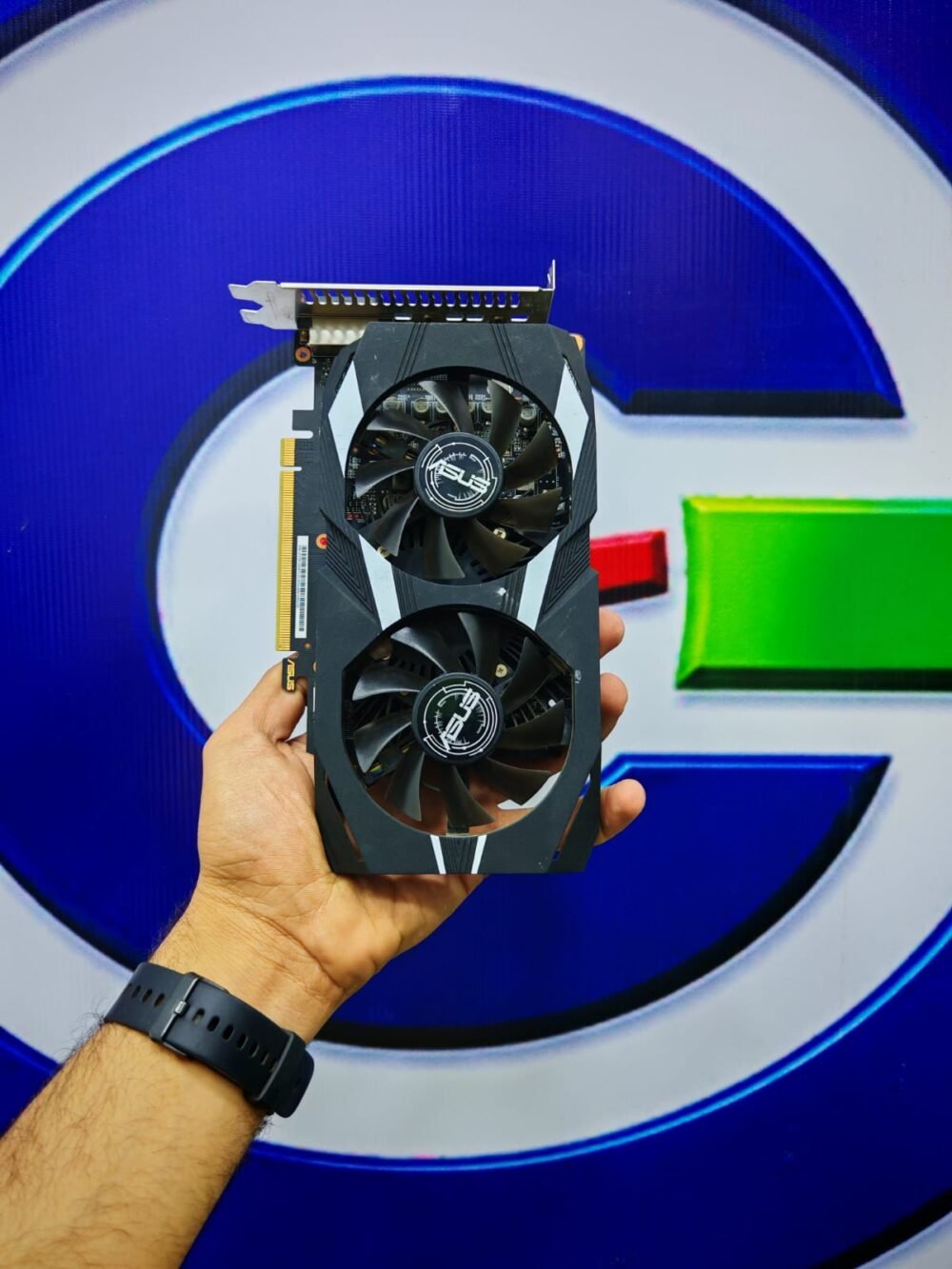
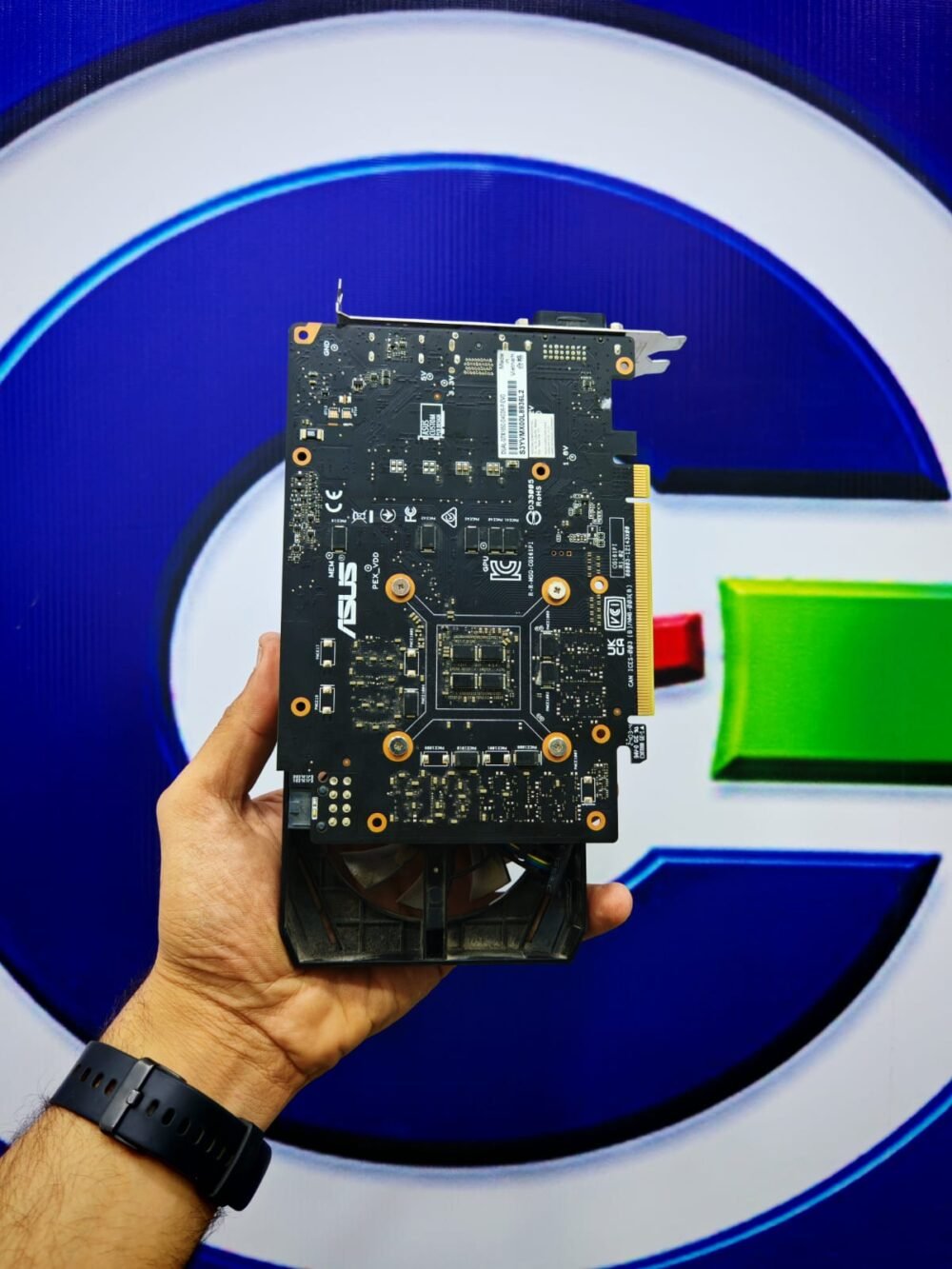
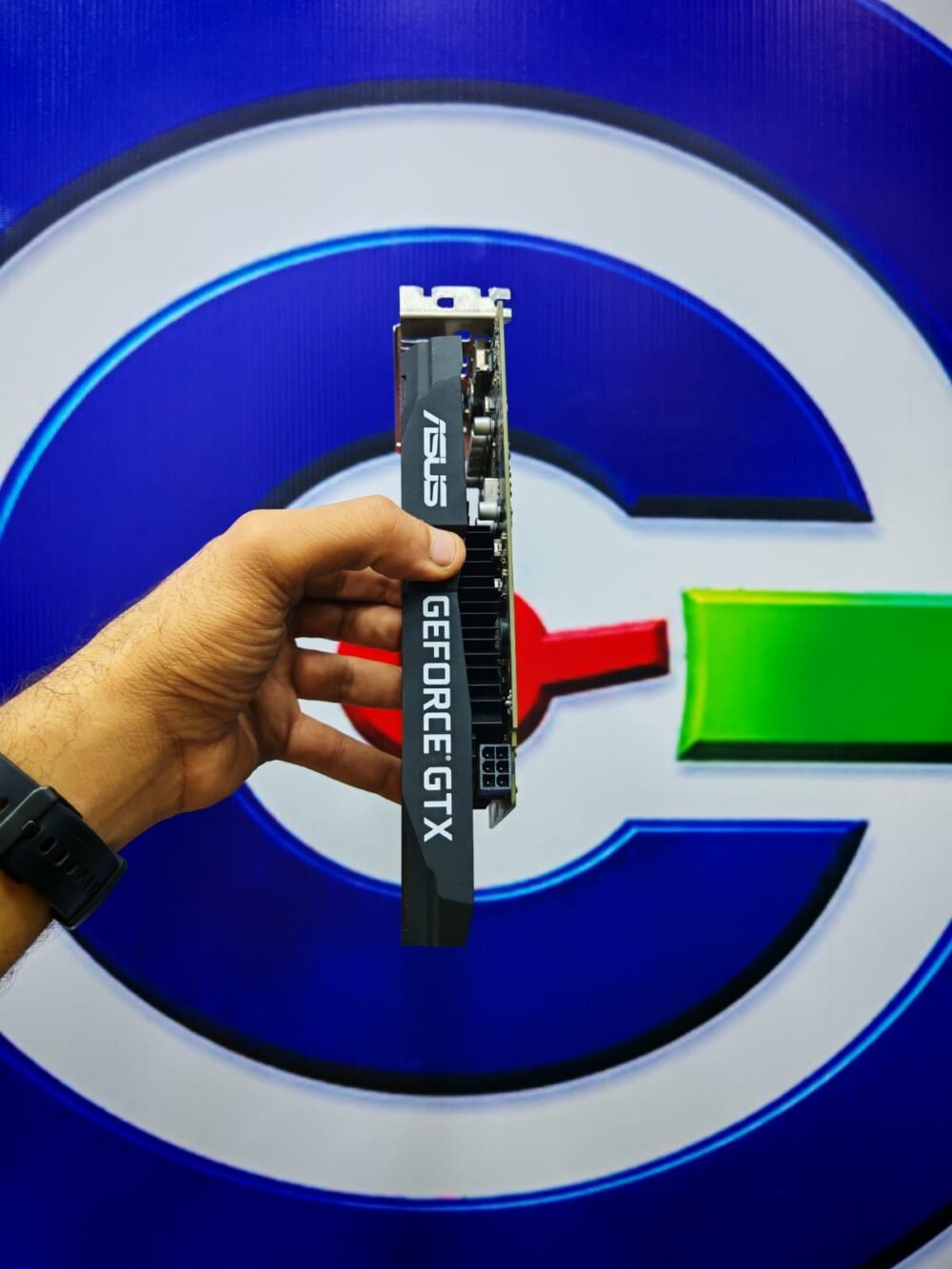






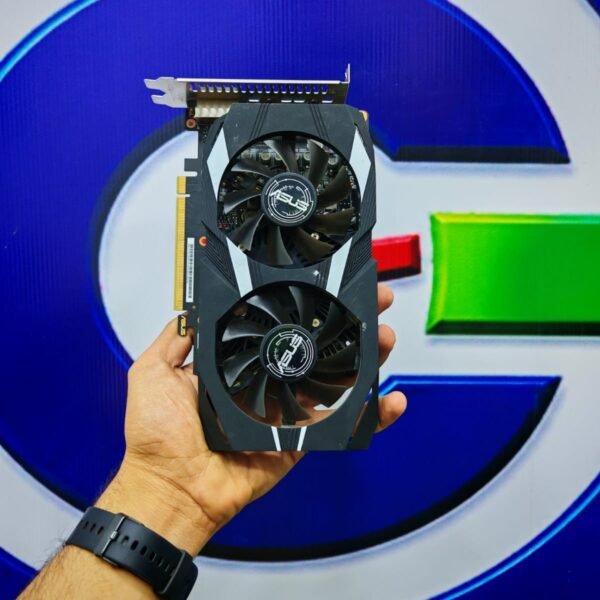
Asus Nvidia GeForce Gtx 1650 4gb Gddr6 Dual OC Edition Evo Dual Fan Graphics Card
The ASUS GTX 1650 4GB GDDR6 Dual OC Edition EVO combines NVIDIA Turing Architecture with fast GDDR6 memory and ASUS dual-fan cooling to deliver dependable 1080p gaming and practical GPU acceleration for everyday creative and professional workloads. Its factory-overclocked Boost Clock reaches 1785 MHz in OC mode, while 4GB of dedicated VRAM and 896 CUDA Cores provide the graphics processing resources needed for a wide range of applications.
Designed for Gamers who enjoy competitive titles and popular games at 1080p, this graphics card is also suitable for students, graphic designers, office professionals, and users working with 2D design, image editing, and light 3D projects. Its compact dual-slot form factor, multiple display outputs, and 6-pin power connection make it a practical option for upgrading a compatible desktop PC.
Technical Specifications Table
The ASUS Dual OC Edition EVO is based on the NVIDIA GeForce GTX 1650 GPU and features GDDR6 memory operating at an effective speed of 12 Gbps. Its 128-bit memory interface delivers up to 192 GB/s of theoretical memory bandwidth, providing faster memory throughput than the original GDDR5 GTX 1650 configuration.
| Specification | Details |
|---|---|
| Graphics Card Model | ASUS Dual GeForce GTX 1650 OC Edition EVO |
| Model Number | DUAL-GTX1650-O4GD6-P-EVO |
| GPU Architecture | NVIDIA Turing |
| GPU Chip | TU117 |
| Original GPU Release Date | April 23, 2019 |
| CUDA Cores | 896 |
| GPU Base Clock | Not specified by ASUS for this model |
| GPU Boost Clock – Default Mode | 1755 MHz |
| GPU Boost Clock – OC Mode | 1785 MHz |
| VRAM Capacity | 4GB |
| Memory Type | GDDR6 |
| Memory Interface | 128-bit |
| Effective Memory Speed | 12 Gbps |
| Memory Bandwidth | 192 GB/s |
| PCI Express Interface | PCI Express 3.0 |
| Reference GPU Power Rating | 75W |
| Recommended Power Supply | 300W |
| Power Connector | 1 × 6-pin PCIe |
| Cooling System | Dual Fan |
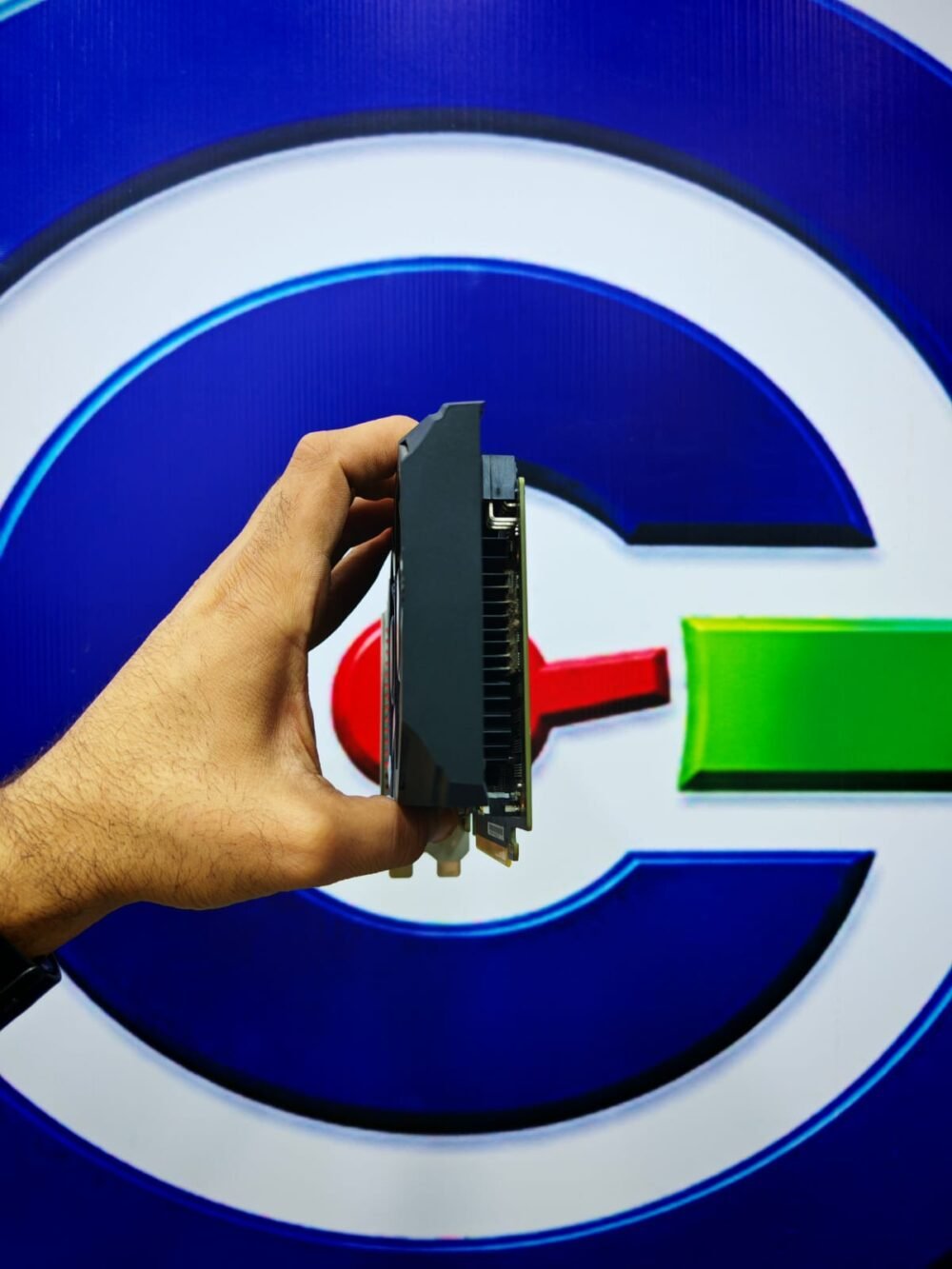
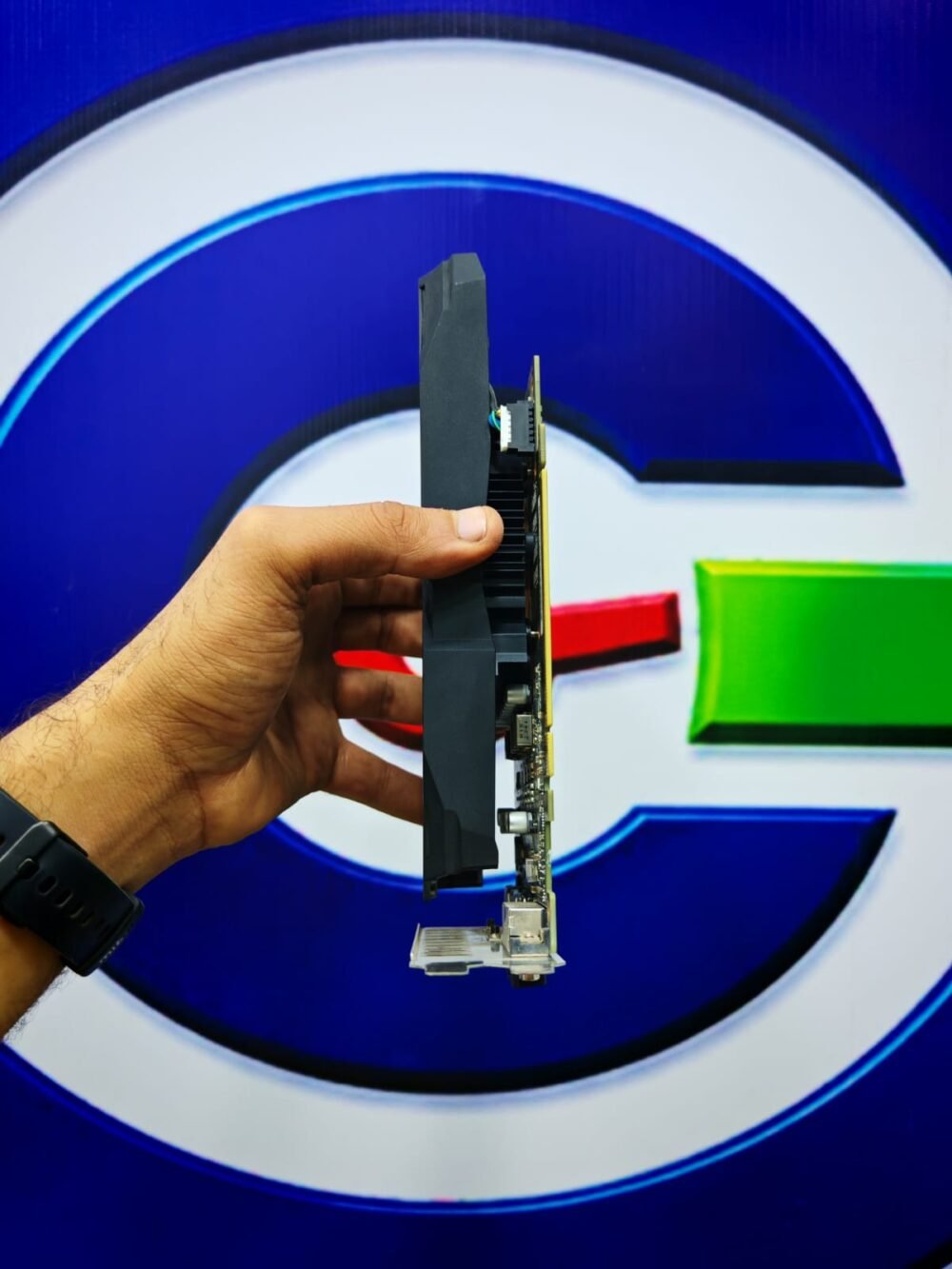
| Card Dimensions | 21.2 × 12.1 × 4.0 cm |
| Slot Occupancy | 2 Slots |
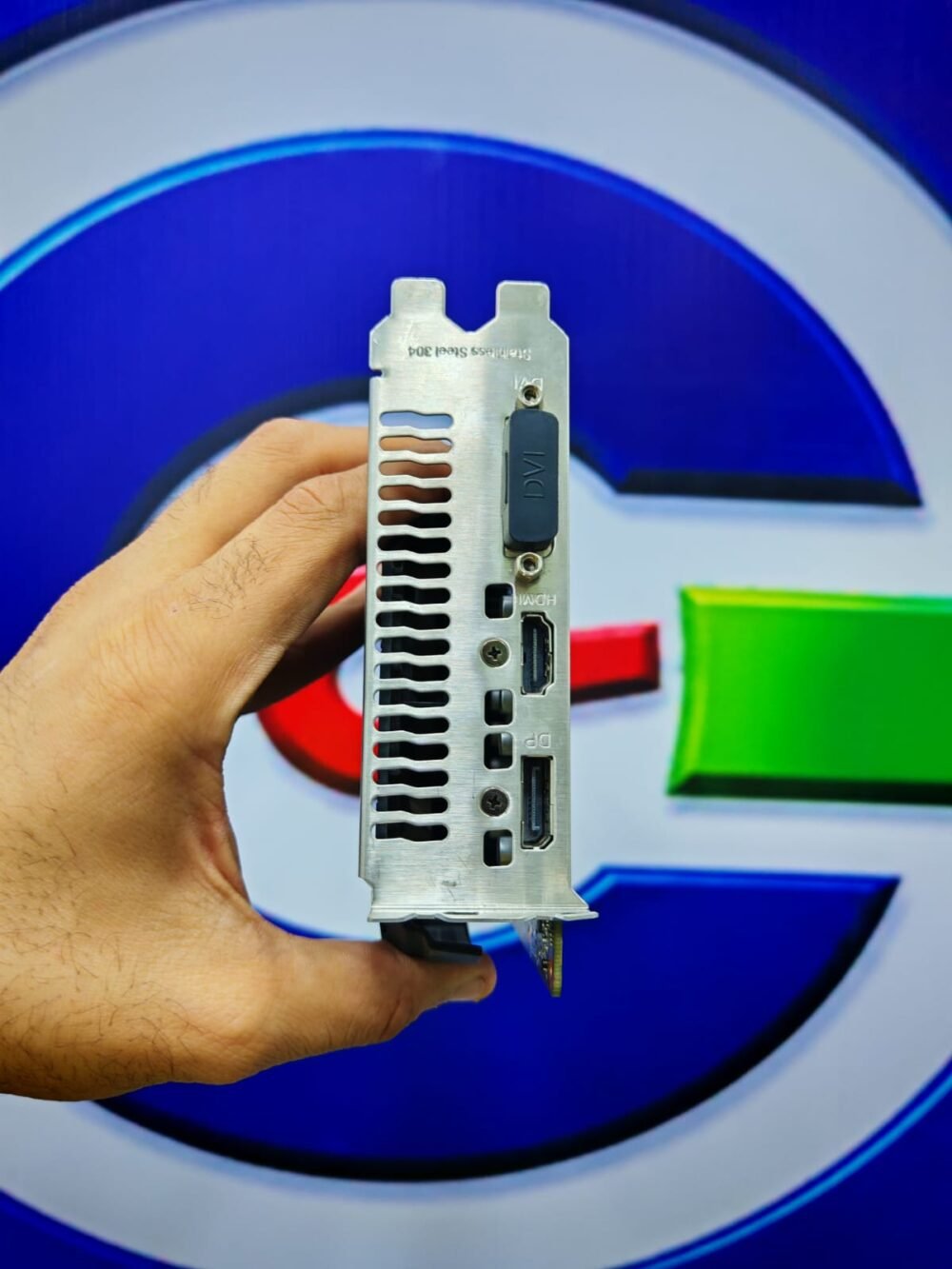
| DisplayPort | 1 × DisplayPort 1.4a |
| HDMI | 1 × HDMI 2.0b |
| DVI | 1 × Native DVI-D |
| Maximum Display Support | 3 Displays |
| Maximum Digital Resolution | 7680 × 4320 |
| DirectX Support | DirectX 12 |
| OpenGL Support | OpenGL 4.6 |
Technical notes: April 23, 2019 is the original GeForce GTX 1650 GPU launch date, not a confirmed release date for this particular ASUS EVO board. ASUS does not publish a Base Clock or a specific board-power figure on the product specification page; the 75W figure refers to the GPU’s reference power rating. The recommended PSU and 6-pin connector are the specifications published by ASUS for this model.
Build Quality & Thermal Design
The ASUS Dual GTX 1650 OC Edition EVO features a practical dual-fan cooling design developed to maintain consistent airflow across the heatsink during gaming and everyday workloads. Its two fans distribute cooling across the GPU area, helping manage operating temperatures during extended use while maintaining a clean, understated appearance that fits naturally into a wide range of desktop PC configurations.
ASUS incorporates IP5X dust-resistance certification into the fan design, helping protect the cooling system against dust accumulation and supporting long-term reliability. The card also benefits from ASUS Auto-Extreme Technology, an automated manufacturing process designed to improve production consistency and component reliability. Its stainless-steel mounting bracket adds structural strength and corrosion resistance, while the two-slot design provides a straightforward installation footprint.
The PCB and power-delivery components are designed around the GTX 1650’s operating requirements, with a dedicated 6-pin PCIe power connector supplying additional power to the card. Together, the dual-fan cooling system, reinforced bracket, and automated manufacturing process give this model a well-considered construction for daily gaming and desktop use.
Exclusive Features & Software Technologies
The ASUS GTX 1650 4GB GDDR6 Dual OC Edition EVO combines NVIDIA’s Turing graphics technologies with ASUS utilities that help users monitor, configure, and maintain their graphics card.
NVIDIA Turing Architecture: Turing introduces improvements to shader execution, concurrent floating-point and integer operations, and adaptive shading. These architectural features help the GPU process modern graphics workloads efficiently and deliver a responsive experience in supported games and applications.
Factory Overclocking: The card reaches a Boost Clock of 1785 MHz in OC mode and 1755 MHz in Default mode. This factory configuration provides an additional clock-speed advantage over the standard operating profile.
GDDR6 Memory: The 4GB GDDR6 configuration operates at 12 Gbps across a 128-bit interface, delivering 192 GB/s of theoretical memory bandwidth. This supports smoother asset access and responsive graphics processing in suitable 1080p workloads.
IP5X Dust-Resistant Fans: The cooling fans are designed to resist dust ingress, helping preserve cooling performance and support dependable operation over time.
ASUS GPU Tweak III: This utility provides GPU monitoring, clock adjustments, fan controls, and performance tuning options through an accessible interface. Users can monitor temperatures and operating frequencies while configuring the card according to their preferences.
NVIDIA G-SYNC: With a compatible G-SYNC display, the graphics card can synchronize the monitor’s refresh rate with GPU output to reduce screen tearing and improve perceived smoothness.
NVIDIA GeForce Experience: Supported GeForce Experience features include driver updates, game capture, screenshots, and gameplay recording. Availability of individual features depends on the installed software and driver version.
ASUS Auto-Extreme Technology: This automated manufacturing process completes soldering in a single production pass, reducing thermal stress during manufacturing and supporting consistent component assembly.
Gaming Performance Benchmark Table
The ASUS GTX 1650 GDDR6 Dual OC EVO is best suited to 1080p gaming. Its 4GB VRAM capacity and Turing GPU architecture can deliver a responsive experience in competitive games and many established titles, particularly when using Low or Medium graphics settings.
The following table provides estimated performance ranges for a system with a reasonably balanced modern CPU, 16GB of system RAM, and updated graphics drivers. Actual FPS can vary depending on the processor, game version, map, graphics settings, driver version, and background applications. These figures are indicative estimates, not results from controlled tests of this exact card.
| Game | Resolution | Recommended Settings | Estimated FPS |
|---|---|---|---|
| Valorant | 1080p | High | 120–180 FPS |
| Counter-Strike 2 | 1080p | Low | 55–85 FPS |
| Grand Theft Auto V – Legacy Edition | 1080p | High / Normal Mix | 65–90 FPS |
| PUBG: Battlegrounds | 1080p | Low | 45–65 FPS |
| Fortnite | 1080p | Performance Mode | 80–130 FPS |
| Apex Legends | 1080p | Low | 50–70 FPS |
| Tom Clancy’s Rainbow Six Siege | 1080p | Medium | 85–120 FPS |
| Overwatch 2 | 1080p | Low / Medium | 65–95 FPS |
| EA SPORTS FC 26 | 1080p | High | 90–140 FPS |
| eFootball | 1080p | High | 60 FPS* |
| Forza Horizon 5 | 1080p | Low | 35–50 FPS |
| Red Dead Redemption 2 | 1080p | Low / Balanced | 30–40 FPS |
| Cyberpunk 2077 | 1080p | Low, FSR where available | 25–35 FPS |
| The Witcher 3 | 1080p | Medium, DX11 | 40–55 FPS |
| Hogwarts Legacy | 1080p | Low, upscaling where available | 20–30 FPS |
eFootball performance is capped by the game’s frame-rate configuration in supported modes; actual output depends on the selected version and settings. EA SPORTS FC 26 and eFootball are listed as representative current football titles; performance in future releases may differ.
For competitive titles such as Valorant, Fortnite Performance Mode, and Rainbow Six Siege, the card can provide a satisfying 1080p experience with appropriately selected settings. More demanding open-world games benefit from reduced texture quality and other graphics adjustments to keep VRAM usage under control. Ray tracing is not a practical target for this GPU, and the card does not include dedicated Tensor Cores.
Professional Applications & Workstation Efficiency
Beyond gaming, the ASUS GTX 1650 GDDR6 Dual OC EVO offers CUDA-based GPU acceleration for compatible creative and professional applications. Its 4GB VRAM capacity makes it most appropriate for 2D design, image processing, Full HD video workflows, and light 3D scenes.
| Professional Application | Typical Workload | Expected Performance |
|---|---|---|
| Adobe Photoshop | Photo editing, layers, filters, and GPU-accelerated effects | Good for everyday editing and medium-sized projects |
| Adobe Premiere Pro | Full HD timeline playback and GPU-accelerated effects | Suitable for basic Full HD editing; complex timelines may require proxies |
| Autodesk AutoCAD | 2D drafting, technical drawings, and basic 3D viewport work | Good for general 2D drafting and light 3D projects |
| Blender | Modeling, viewport navigation, and basic rendering | Suitable for learning, modeling, and small scenes |
| Adobe Illustrator | Vector graphics, illustrations, and design layouts | Very good for typical 2D design workflows |
| Adobe Lightroom Classic | Photo organization, color adjustments, and image processing | Good for everyday photo editing |
| SketchUp | Architectural modeling and viewport navigation | Suitable for small and medium-sized models |
| CapCut Desktop | Full HD video editing, transitions, and effects | Suitable for basic editing and moderate projects |
| DaVinci Resolve | Full HD editing, color correction, and basic effects | Suitable for simple timelines; complex effects are VRAM-intensive |
| Autodesk Revit | Architectural modeling, drawing views, and project visualization | Suitable for smaller projects and standard viewport tasks |
Performance in professional applications depends on the CPU, system memory, storage speed, project complexity, software version, and whether the application supports NVIDIA CUDA acceleration. For demanding 3D rendering, large architectural models, high-resolution video editing, and complex effects, a graphics card with more VRAM and a newer GPU architecture will provide greater flexibility.
A Practical Upgrade for 1080p Gaming and Everyday Creation
A well-balanced desktop PC needs a graphics card that matches its intended workloads. This ASUS Dual design brings together GDDR6 memory, factory-overclocked performance, dependable dual-fan cooling, and useful display connectivity in one straightforward package.
For Gamers focused on competitive 1080p titles, students developing technical skills, and professionals handling everyday design and image-editing tasks, it provides a capable graphics foundation. Its ASUS cooling features, GPU Tweak III support, and NVIDIA driver ecosystem add useful flexibility for daily operation.
Explore the ASUS GTX 1650 GDDR6 Dual OC EVO at GC Hardware and choose a graphics solution suited to your gaming, creative, and everyday desktop needs.



Reviews
There are no reviews yet.