

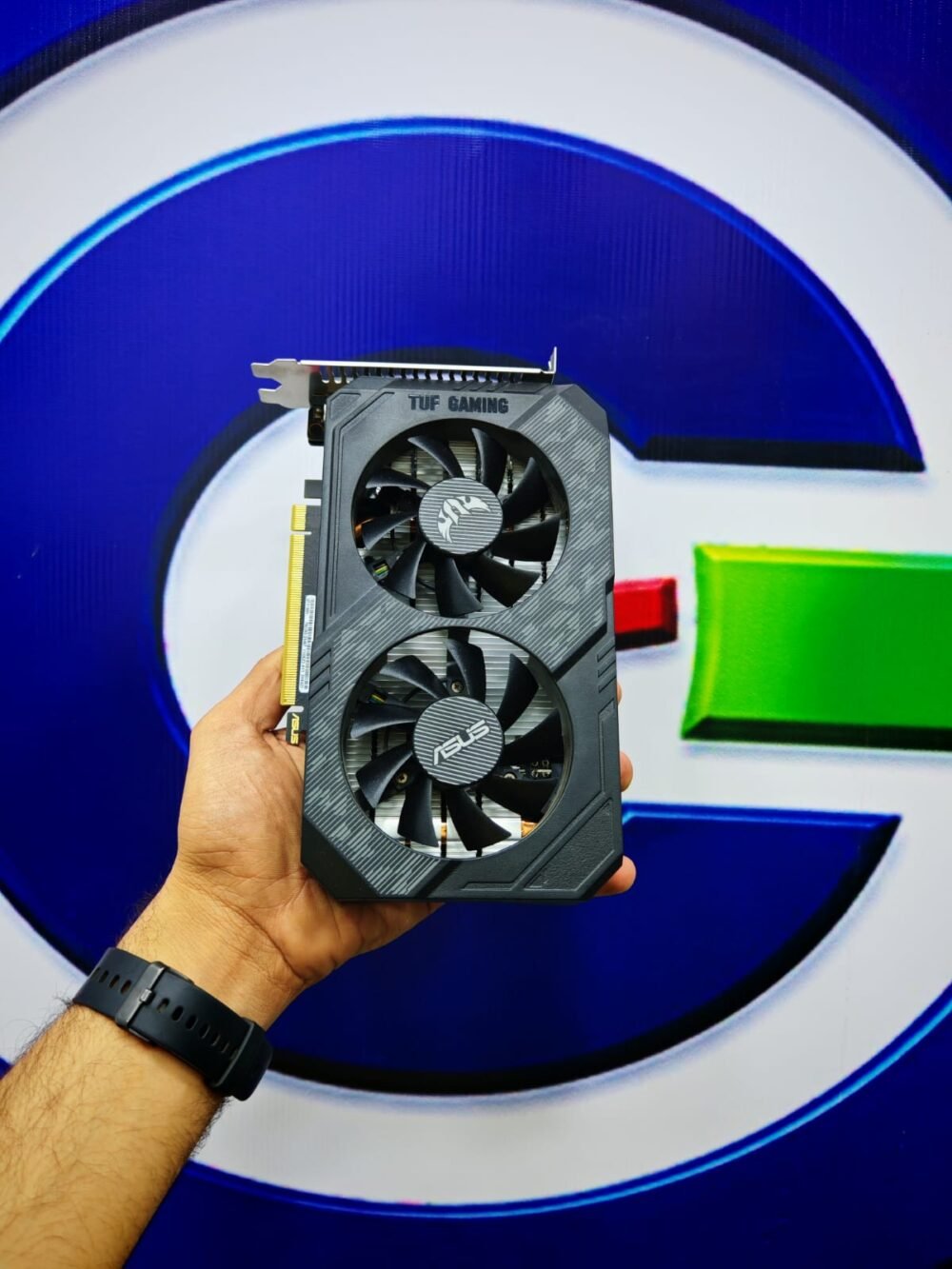
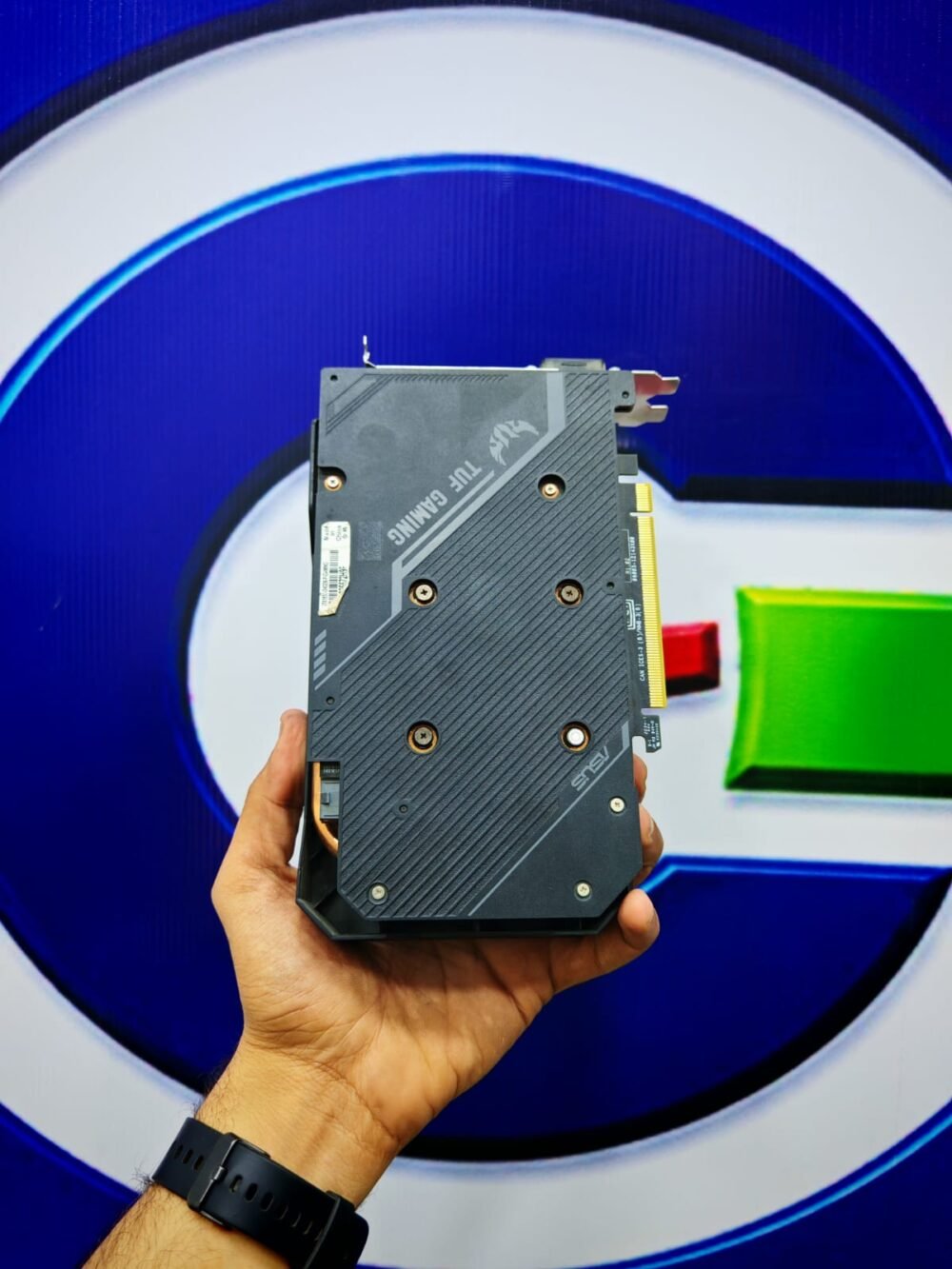
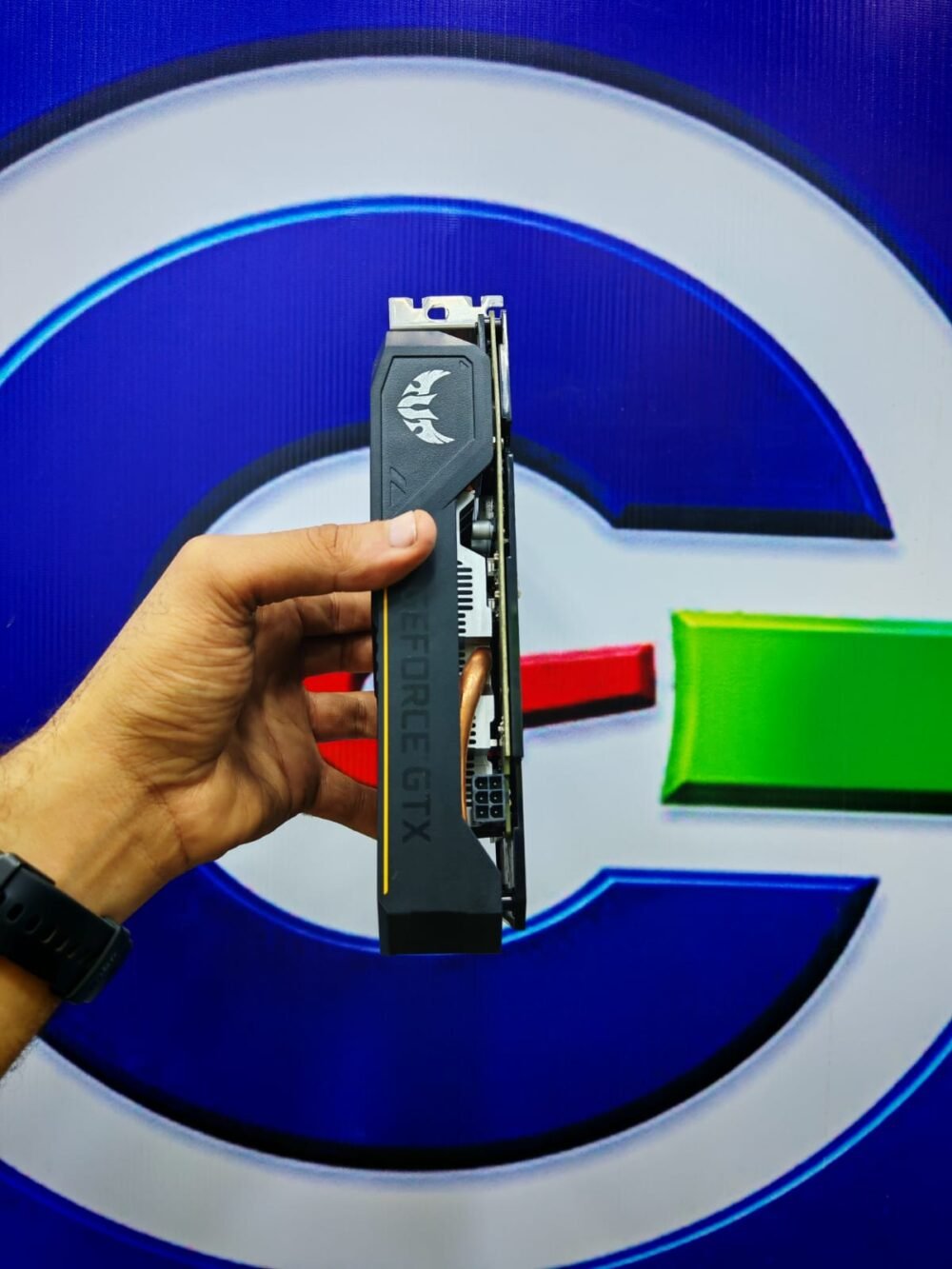






Asus Nvidia GeForce Gtx 1650 4gb Gddr6 Tuf Gaming OC Edition Dual Fan Graphics Card
The ASUS GTX 1650 4GB GDDR6 is Full HD graphics performance, efficient GPU acceleration, and smooth operation across a wide range of applications. Powered by NVIDIA Turing Architecture, this graphics card combines 896 CUDA Cores, 4GB of high-speed GDDR6 Memory, and a factory-overclocked GPU to deliver responsive performance in competitive gaming, multimedia, and professional productivity.
Its GDDR6 Memory operates at 12 Gbps, delivering up to 192 GB/s of Memory Bandwidth, making it a practical choice for Full HD gaming, 2D engineering applications, and everyday workstation tasks.
Technical Specifications
| Specification | Details |
|---|---|
| Manufacturer | ASUS |
| Product Series | TUF Gaming |
| Model | TUF-GTX1650-O4GD6-GAMING |
| Graphics Engine | NVIDIA GeForce GTX 1650 |
| GPU Architecture | NVIDIA Turing |
| GPU Chip | TU117 |
| Release Date | June 12, 2020 |
| CUDA Cores | 896 |
| GPU Base Clock | 1410 MHz |
| GPU Boost Clock | 1650 MHz (Gaming Mode) |
| GPU Boost Clock (OC Mode) | 1680 MHz |
| VRAM | 4GB GDDR6 |
| Memory Type | GDDR6 |
| Memory Bus | 128-bit |
| Memory Clock | 12 Gbps Effective |
| Memory Bandwidth | 192 GB/s |
| TDP / Graphics Card Power | Approximately 75W |
| Recommended PSU | 300W |
| Power Connectors | None – PCIe Slot Powered |
| Interface | PCI Express 3.0 x16 |
| Dimensions | 20.45 × 12.49 × 4.56 cm |
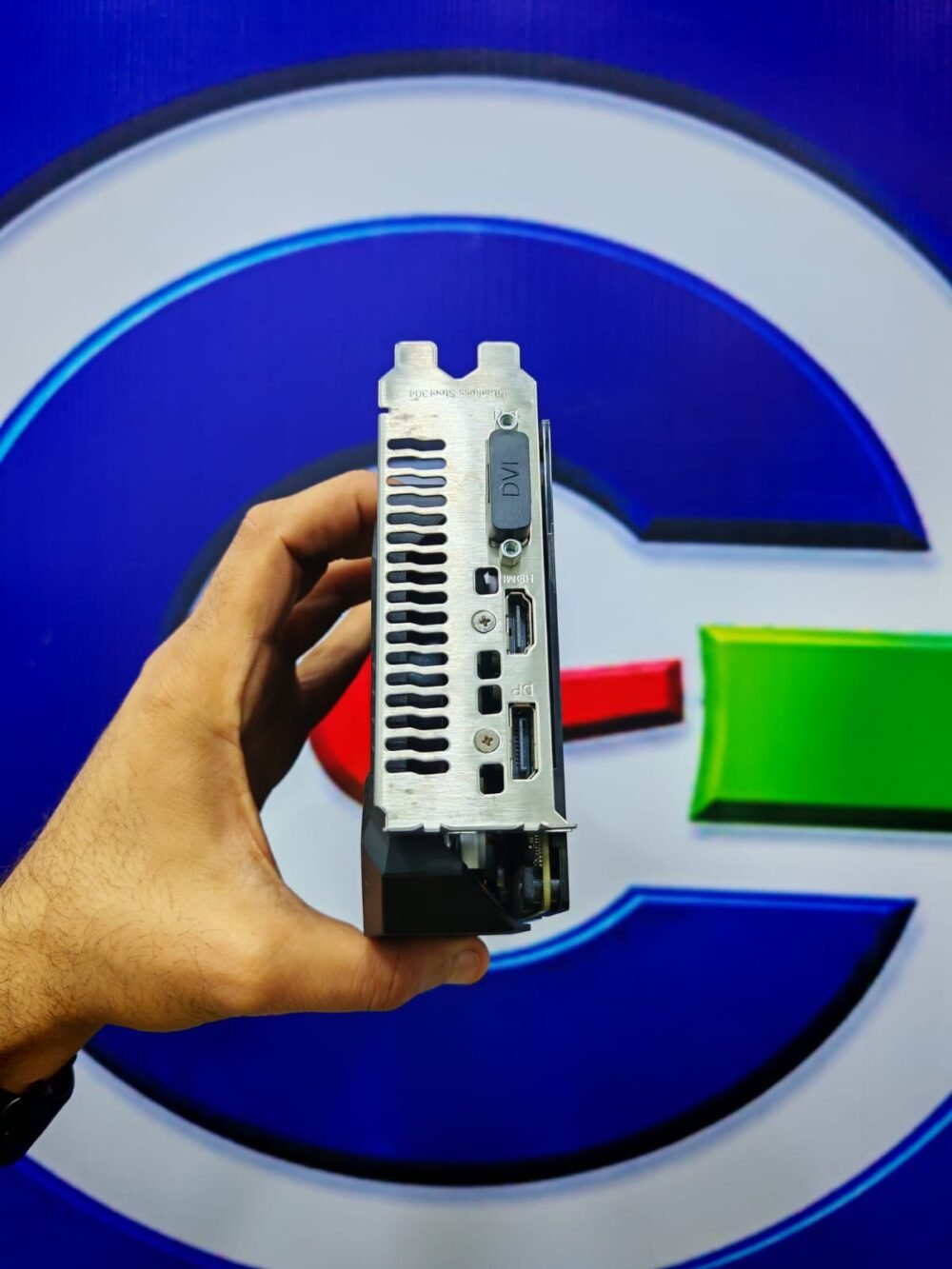
| DisplayPort | 1 × DisplayPort 1.4 |
| HDMI | 1 × HDMI 2.0b |
| DVI | 1 × Dual-Link DVI-D |
| Maximum Display Support | 3 Displays |
| Maximum Digital Resolution | 7680 × 4320 |
| DirectX Support | DirectX 12 |
| OpenGL Support | OpenGL 4.6 |
| HDCP Support | HDCP 2.2 |
| Cooling System | Dual-Fan Active Cooling |
| Dust Protection | IP5X |
| Overclocking Software | ASUS GPU Tweak II |
| Additional Software | NVIDIA GeForce Experience |
Specifications refer to the ASUS TUF-GTX1650-O4GD6-GAMING model, not the externally powered TUF GTX 1650 GDDR6-P variant.
Build Quality & Thermal Design
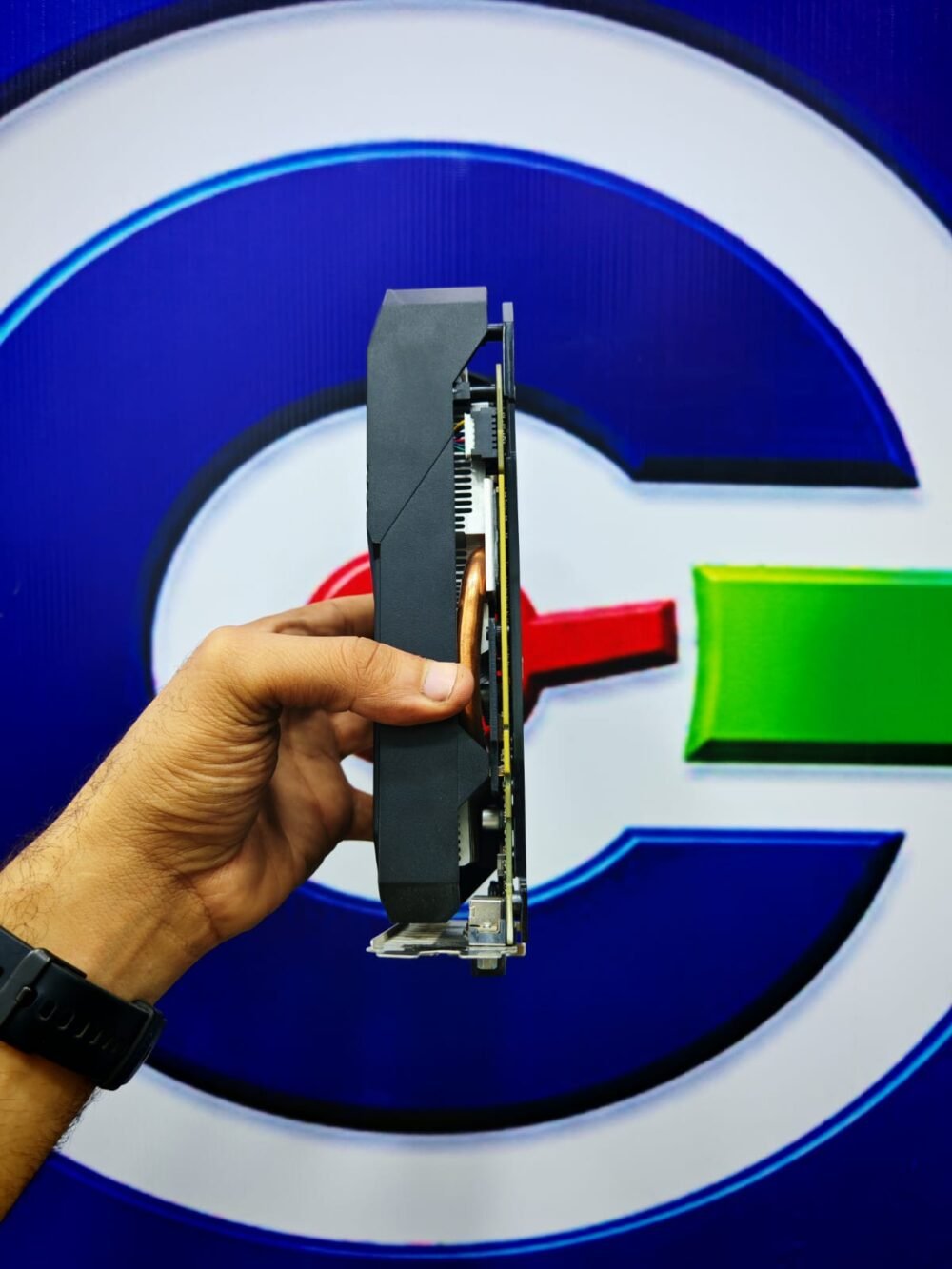
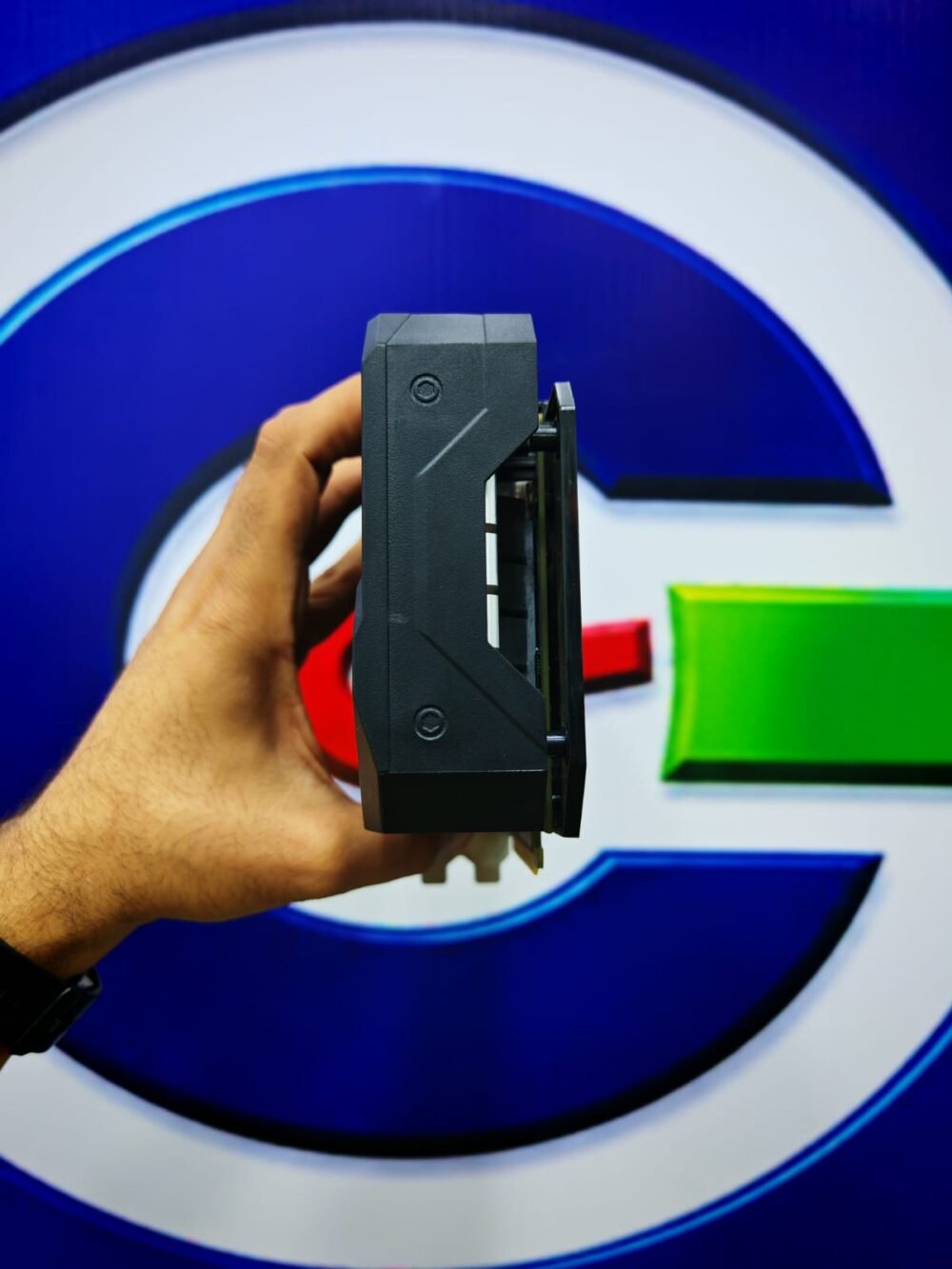
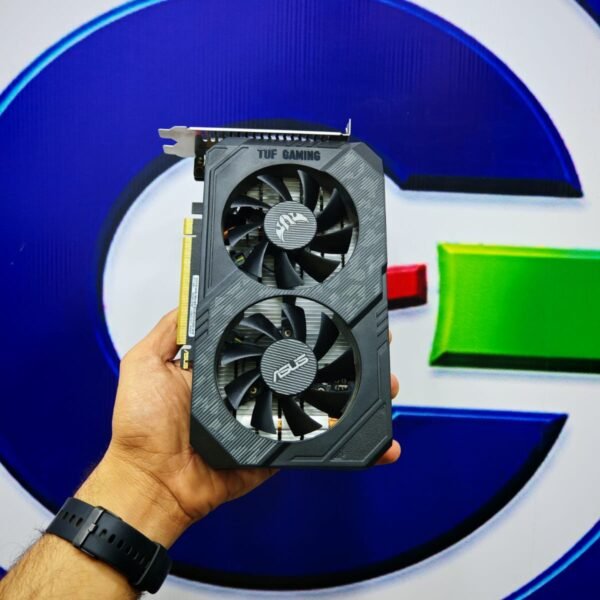
The ASUS TUF Gaming series emphasizes durability, thermal efficiency, and reliable construction. This model features a distinctive dual-fan cooling system designed to maintain consistent airflow across the GPU heatsink during extended gaming sessions and demanding workloads.
One of its standout features is the implementation of IP5X-certified dust-resistant fans, helping prevent dust accumulation and supporting long-term cooling efficiency. The fans also incorporate dual-ball-bearing durability characteristics through ASUS’s space-grade lubricant technology, delivering a quieter operating profile and extended fan lifespan.
The graphics card benefits from ASUS Auto-Extreme Technology, an automated manufacturing process designed to improve production consistency and component reliability. Its protective backplate adds structural support and helps protect the PCB during installation and transportation.
Internally, the card uses NVIDIA’s TU117 GPU based on the 12nm FinFET manufacturing process, combined with a 128-bit GDDR6 Memory interface. Its efficient power design operates without requiring an additional PCIe power connector, making it compatible with many desktop systems equipped with a suitable 300W PSU.
The combination of durable construction, dual-fan cooling, and efficient power delivery makes it a practical solution for users who value long-term everyday operation.
Exclusive Features & Software Technologies
The ASUS GTX 1650 4GB GDDR6 combines NVIDIA Turing Architecture with ASUS TUF Gaming technologies to provide useful capabilities for gaming, creative production, and everyday computing.
1. NVIDIA Turing Architecture
The Turing GPU Architecture delivers improved graphics processing efficiency and supports modern graphics technologies, providing responsive performance in compatible games and professional applications.
2. High-Speed GDDR6 Memory
Its 4GB GDDR6 Memory operates at 12 Gbps, offering 192 GB/s of Memory Bandwidth. This provides faster memory throughput than the earlier GDDR5 GTX 1650 configurations.
3. ASUS IP5X Dust-Resistant Fans
The dual-fan cooling solution features IP5X dust resistance, helping protect the cooling system from particle ingress and supporting consistent thermal performance.
4. ASUS Auto-Extreme Technology
A fully automated manufacturing process designed to enhance production precision and improve overall component reliability.
5. ASUS GPU Tweak II
Provides GPU monitoring and customization options, including:
- GPU Clock adjustment.
- Memory Clock monitoring.
- Fan Speed control.
- GPU Temperature monitoring.
- Voltage and performance monitoring.
- Customizable operating profiles.
6. NVIDIA GeForce Experience
Provides driver management, game optimization, gameplay recording, screenshots, and supported streaming features.
7. NVIDIA G-SYNC Compatibility
Supports G-SYNC-compatible displays, allowing synchronized refresh rates for smoother gameplay and reduced screen tearing.
8. NVIDIA CUDA Technology
Its 896 CUDA Cores support parallel computing and GPU acceleration in compatible professional software, rendering applications, and computational workloads.
9. NVIDIA NVENC Video Encoding
Provides hardware-assisted H.264 and HEVC video encoding through compatible applications, helping reduce CPU workload during supported recording and streaming tasks.
10. Multi-Monitor Connectivity
With DisplayPort 1.4, HDMI 2.0b, and DVI-D outputs, the card supports up to three displays, making it suitable for productivity environments, multitasking, and multi-screen desktop configurations.
Gaming Performance Benchmarks – 1080p Full HD
The ASUS GTX 1650 4GB GDDR6 is particularly suitable for Full HD gaming, offering responsive performance in competitive games and a practical experience across many popular PC titles.
Its GDDR6 Memory provides additional bandwidth compared with GDDR5 GTX 1650 variants, while its factory-overclocked GPU helps deliver consistent graphics performance.
The following table presents realistic estimated average FPS ranges at 1080p, based on the card’s specifications and expected performance with optimized graphics settings.
| Game | Resolution | Graphics Settings | Estimated Average FPS |
|---|---|---|---|
| Valorant | 1080p | High | 120–170 FPS |
| Counter-Strike 2 | 1080p | Low | 65–95 FPS |
| GTA V | 1080p | High / Normal | 65–85 FPS |
| PUBG: Battlegrounds | 1080p | Low / Medium | 45–60 FPS |
| Fortnite | 1080p | Performance Mode | 75–110 FPS |
| EA Sports FC 26 | 1080p | High | 60 FPS |
| eFootball | 1080p | High | 60 FPS |
| Cyberpunk 2077 | 1080p | Low | 30–40 FPS |
| Red Dead Redemption 2 | 1080p | Low / Optimized | 30–40 FPS |
| Apex Legends | 1080p | Low | 45–60 FPS |
| Overwatch 2 | 1080p | Medium | 65–85 FPS |
| Rainbow Six Siege | 1080p | Medium | 90–120 FPS |
| The Witcher 3 | 1080p | Medium | 45–60 FPS |
| Forza Horizon 5 | 1080p | Low | 35–45 FPS |
| Shadow of the Tomb Raider | 1080p | Low | 40–50 FPS |
Benchmark methodology and assumptions:
- FPS values are estimated ranges, not measurements from a controlled test of this exact graphics card.
- Testing assumptions include a modern mid-range CPU, 16GB Dual-Channel RAM, SSD storage, and updated graphics drivers.
- Performance varies according to CPU performance, game updates, map complexity, and graphics settings.
- Fortnite uses Performance Mode, while demanding AAA games use optimized Low settings.
- EA Sports FC and eFootball figures assume compatible game versions and suitable settings with a 60 FPS frame-rate target.
- Some newer releases may require additional setting adjustments to maintain smooth gameplay.
For competitive Gamers, titles such as Valorant, Rainbow Six Siege, and Fortnite Performance Mode provide particularly attractive frame-rate potential. Meanwhile, games with more demanding graphical environments benefit from optimized settings and careful VRAM management.
Professional Applications & Workstation Efficiency
Beyond gaming, the ASUS GTX 1650 4GB GDDR6 provides dedicated graphics processing for a variety of professional applications used by graphic designers, architects, engineers, video editors, and content creators.
Its CUDA architecture supports GPU acceleration in compatible applications, while its 4GB VRAM capacity makes it suitable for everyday creative projects, 2D engineering, moderate 3D modeling, and Full HD video editing.
| Professional Application | Primary Workload | Expected Performance |
|---|---|---|
| Adobe Photoshop | Photo Editing, Image Manipulation, Graphic Design | Very Good |
| Adobe Premiere Pro | Full HD Video Editing and Timeline Acceleration | Good |
| Autodesk AutoCAD | 2D Drafting and 3D Viewport Navigation | Very Good |
| Blender | 3D Modeling, Viewport Navigation and CUDA Rendering | Good for Small Scenes |
| Adobe Illustrator | Vector Graphics and Professional Illustration | Very Good |
| Adobe Lightroom Classic | Photo Processing and Image Organization | Good |
| SketchUp | Architectural Modeling and 3D Visualization | Good for Moderate Projects |
| CapCut Desktop | Video Editing, Transitions and Effects | Good for Full HD Projects |
| DaVinci Resolve | Video Editing and Color Correction | Moderate |
| Autodesk Revit | Building Information Modeling and Architectural Visualization | Good for Small Projects |
Graphic Design and Digital Content Creation
Adobe Photoshop and Illustrator benefit from dedicated graphics acceleration for compatible filters, visual effects, and interface operations. The card is suitable for everyday graphic design, social media content creation, image manipulation, and vector illustration.
Engineering and Architectural Applications
Autodesk AutoCAD users working primarily with 2D technical drawings can benefit from responsive viewport navigation and dedicated graphics processing. SketchUp and Autodesk Revit can also utilize the GPU for compatible visualization tasks, particularly when working with small and moderately complex projects.
Video Editing and Multimedia Production
Adobe Premiere Pro and CapCut can utilize GPU acceleration for supported effects, playback operations, and video encoding. The card is particularly appropriate for Full HD editing workflows, content creation, and everyday multimedia production.
3D Modeling and Rendering
Blender supports CUDA-based rendering on compatible software versions, allowing the GPU to accelerate selected rendering workloads. Its 4GB VRAM is most appropriate for smaller scenes, introductory 3D projects, and moderate viewport operations.
Professional application performance depends on software versions, project complexity, drivers, CPU performance, and memory requirements. Some recent application releases may have different minimum GPU or driver requirements.
A Reliable Choice for Full HD Gaming and Everyday Productivity
Combining NVIDIA Turing Architecture, high-speed GDDR6 Memory, 896 CUDA Cores, and ASUS TUF Gaming engineering, this graphics card delivers a versatile graphics solution for everyday desktop users.
From competitive gaming and Full HD entertainment to graphic design, engineering applications, video editing, and introductory GPU computing, it provides dedicated graphics acceleration across multiple workloads.
Its dust-resistant dual-fan cooling system, protective backplate, factory-overclocked frequencies, and efficient slot-powered design make it a practical addition to compatible desktop systems.
For Gamers and professionals looking for a versatile graphics card that combines ASUS TUF durability with dependable 1080p graphics performance, it represents a well-rounded option for gaming, creativity, and everyday productivity.



Reviews
There are no reviews yet.