
 then 'Add to home screen'
 then 'Add to home screen'



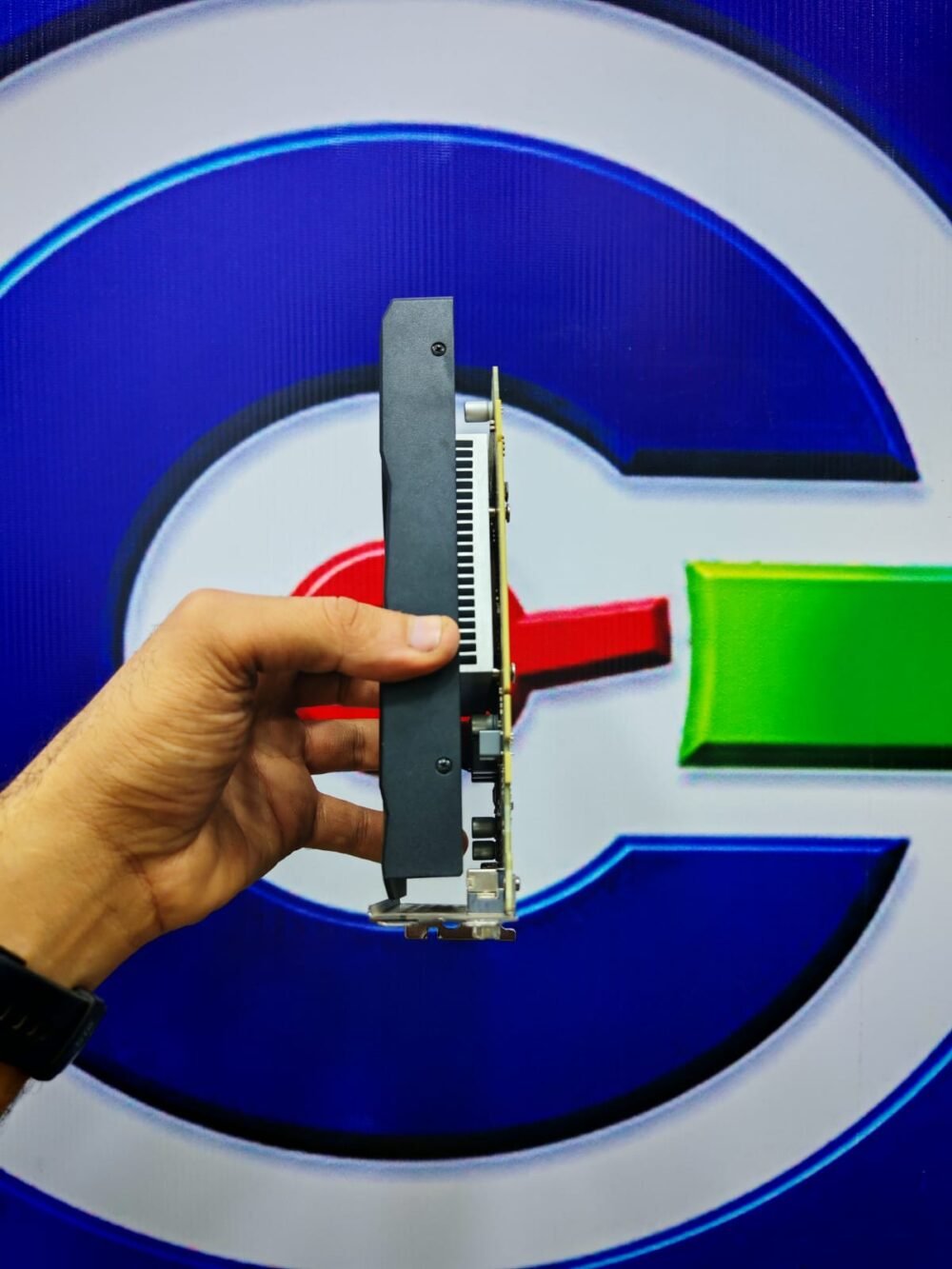

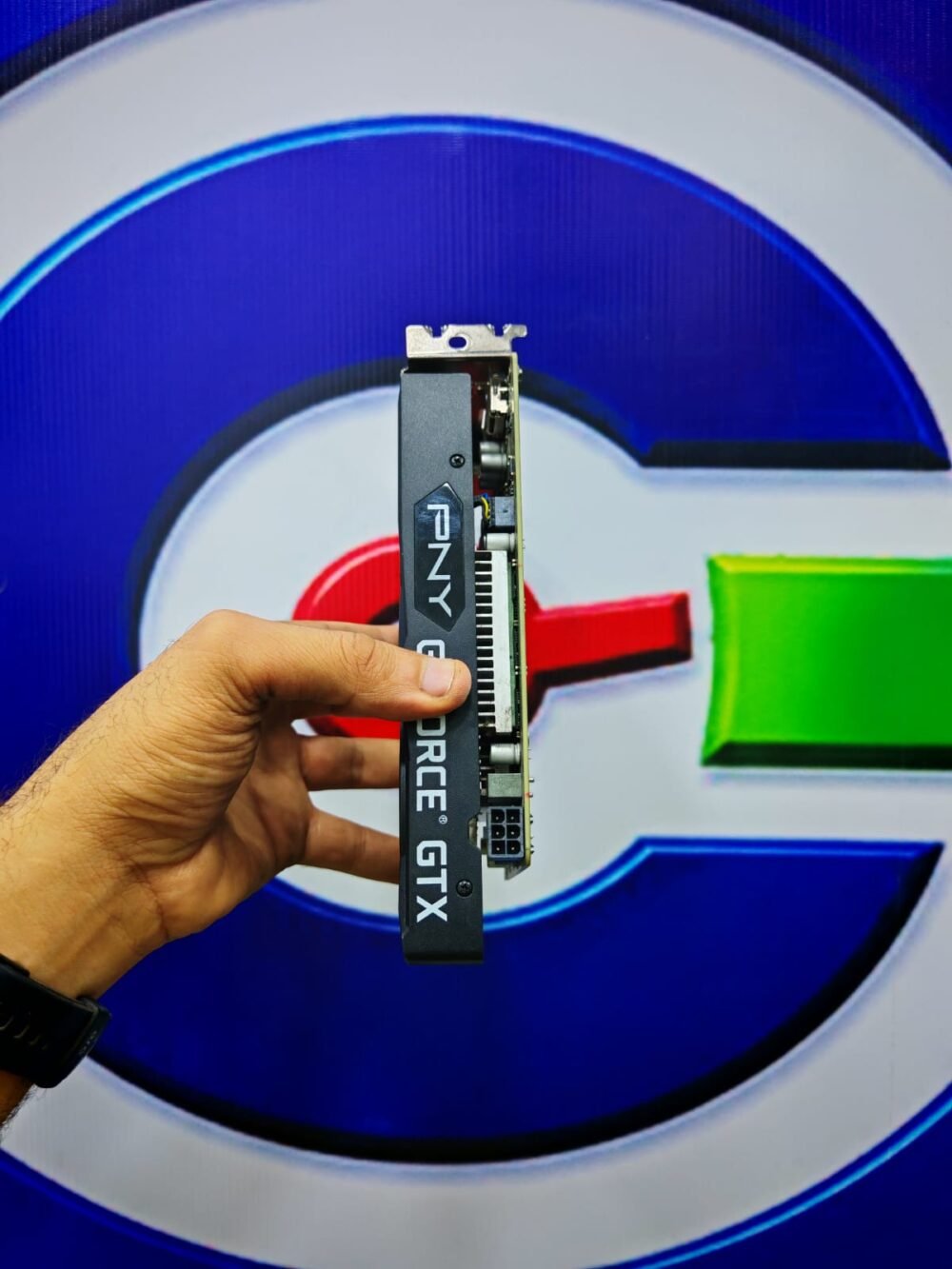
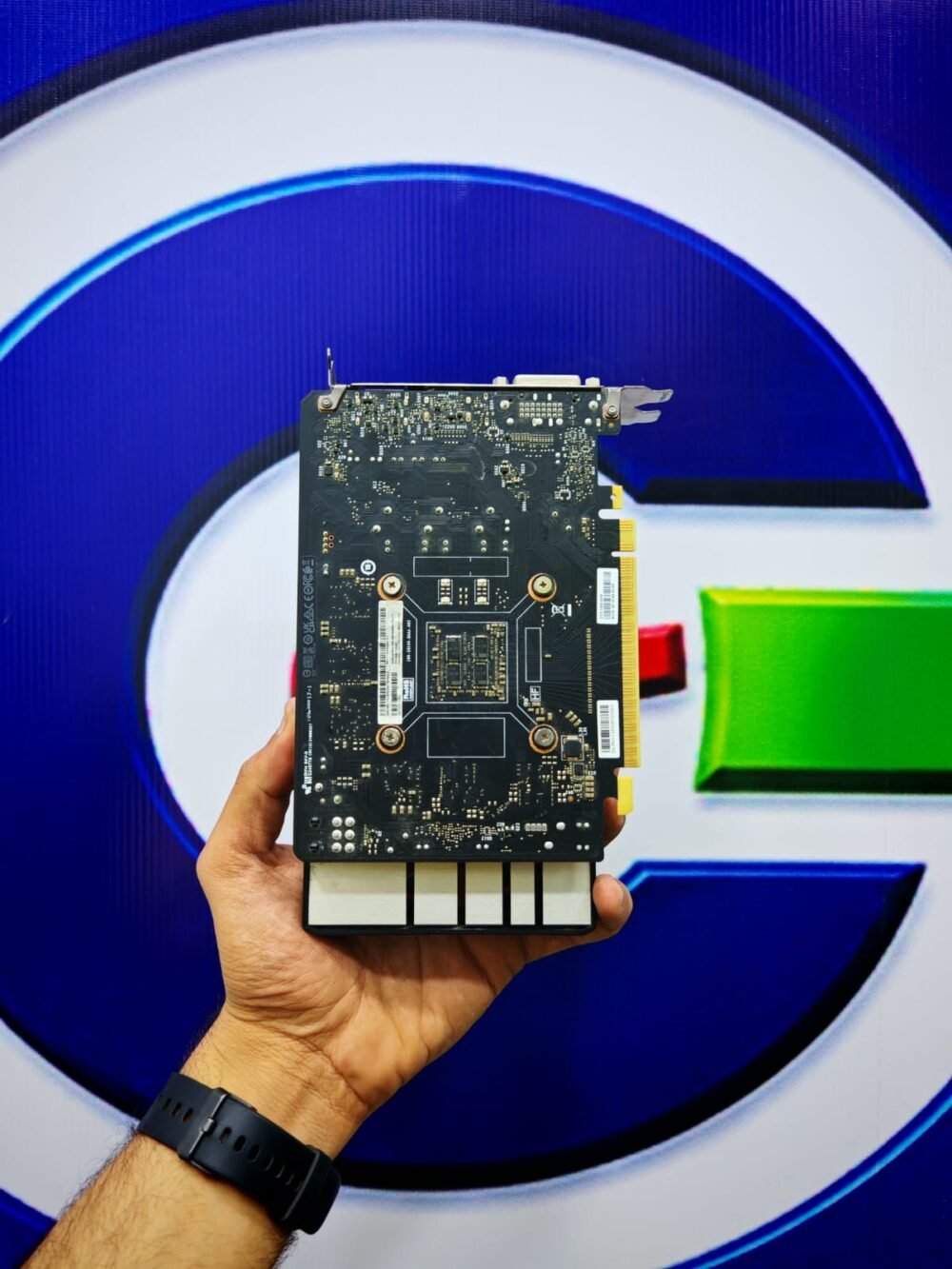






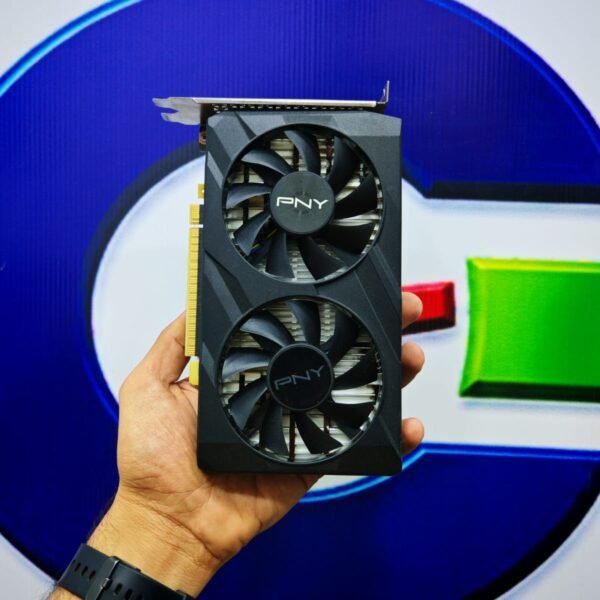
Pny Nvidia GeForce Gtx 1650 4gb Gddr6 Dual Fan Graphics Card
The PNY GTX 1650 4GB GDDR6 Powered by NVIDIA Turing Architecture, it features 896 CUDA Cores, 4GB of high-speed GDDR6 Memory, and a 1590 MHz Boost Clock, providing a balanced combination of graphics processing, memory bandwidth, and power efficiency.
Designed with a dual-fan cooling configuration, this graphics card maintains consistent airflow while supporting extended gaming sessions and everyday professional workloads. Its 12 Gbps GDDR6 Memory and 128-bit Memory Interface deliver 192 GB/s of Memory Bandwidth, providing an advantage over the original GDDR5 GTX 1650 configuration.
Its PCI Express 3.0 interface, three-display support, and 6-Pin power connection make it a versatile option for compatible desktop configurations.
Technical Specifications
| Specification | Details |
|---|---|
| Manufacturer | PNY |
| Graphics Engine | NVIDIA GeForce GTX 1650 |
| Product Series | PNY Dual Fan |
| Model Number | VCG16504D6DFPPB |
| GPU Architecture | NVIDIA Turing |
| GPU Chip | TU117 |
| Original GPU Release Date | April 23, 2019 |
| GDDR6 Edition | 2020 Generation |
| CUDA Cores | 896 |
| GPU Base Clock | 1410 MHz |
| GPU Boost Clock | 1590 MHz |
| VRAM | 4GB |
| Memory Type | GDDR6 |
| Memory Bus | 128-bit |
| Memory Clock | 12 Gbps Effective |
| Memory Bandwidth | 192 GB/s |
| TDP | 75W |
| Recommended PSU | 300W |
| Power Connectors | 1 × 6-Pin PCIe |
| Interface | PCI Express 3.0 x16 |
| Dimensions | 16.99 × 11.20 × 3.99 cm |
| Slot Configuration | Dual-Slot |
| DisplayPort | 2 × DisplayPort 1.4 |
| HDMI | 1 × HDMI 2.0b |
| Maximum Displays | 3 |
| Maximum Digital Resolution | 7680 × 4320 @ 60Hz |
| DirectX Support | DirectX 12 |
| OpenGL Support | OpenGL 4.6 |
| Vulkan Support | Yes |
| HDCP Support | HDCP 2.2 |
| NVIDIA Technologies | CUDA, GPU Boost, Ansel, Highlights |
| Video Encoding | NVIDIA NVENC |
| Cooling System | Dual-Fan Cooling |
| Overclocking Software | MSI Afterburner (Third-Party Compatible) |
Specifications correspond to PNY SKU VCG16504D6DFPPB. PNY has produced other GTX 1650 GDDR6 Dual Fan revisions with different display outputs and dimensions. The physical SKU should be checked before using these specifications for another revision.
Build Quality & Thermal Design
The PNY GTX 1650 features a practical dual-fan cooling design engineered to distribute airflow across the GPU heatsink and maintain stable operating temperatures during gaming and everyday productivity workloads.
Its dual-fan configuration provides active cooling across the graphics processor, while the heatsink assembly helps dissipate heat generated during GPU-intensive operations. The card features a black exterior shroud with a clean, functional design that integrates naturally into different desktop PC configurations.
Internally, the graphics card is built around NVIDIA’s TU117 GPU, manufactured using the 12nm FinFET process. Its PCB integrates the GPU, 4GB GDDR6 Memory modules, voltage regulation circuitry, and dedicated power delivery components.
The 75W TDP provides efficient power consumption for its performance class, while the additional 6-Pin PCIe power connection supplies the required auxiliary power alongside the motherboard’s PCIe slot.
With its dual-slot construction, dedicated cooling system, and straightforward installation requirements, the PNY GTX 1650 offers a practical combination of durability, thermal management, and everyday usability.
Exclusive Features & Software Technologies
The PNY GTX 1650 4GB GDDR6 combines NVIDIA Turing Architecture with a selection of graphics technologies designed to improve gaming, multimedia, and professional application experiences.
1. NVIDIA Turing Architecture
Turing introduces improvements to shader processing, concurrent floating-point and integer operations, and memory architecture. These capabilities contribute to efficient graphics processing across compatible games and applications.
2. High-Speed GDDR6 Memory
The card features 4GB of GDDR6 Memory operating at 12 Gbps, delivering 192 GB/s of Memory Bandwidth through its 128-bit Memory Interface. This allows faster data transfer between the GPU and video memory compared with GDDR5 GTX 1650 configurations.
3. NVIDIA GPU Boost
GPU Boost automatically adjusts operating frequencies according to available power and thermal conditions, helping maintain optimal GPU performance during different workloads.
4. NVIDIA GeForce Experience
Provides access to graphics driver updates, supported game optimization, gameplay recording, screenshots, and additional gaming features.
5. NVIDIA Ansel
Enables compatible games to capture high-resolution screenshots with additional camera controls and visual customization options.
6. NVIDIA Highlights
Automatically captures supported gameplay moments, allowing Gamers to save and share selected achievements and important in-game events.
7. NVIDIA CUDA Technology
The 896 CUDA Cores support parallel processing and GPU acceleration in compatible professional applications, computational workloads, and rendering environments.
8. DirectX 12, Vulkan and OpenGL 4.6
Supports widely used graphics APIs, allowing compatibility with a broad range of PC games, visualization software, and professional applications.
9. NVIDIA NVENC
Provides hardware-assisted H.264 and HEVC video encoding in compatible applications, helping reduce CPU workload during video recording, streaming, and supported editing operations.
10. Three-Display Connectivity
The combination of two DisplayPort 1.4 connections and one HDMI 2.0b port allows users to connect up to three displays for multitasking, productivity, gaming, and multimedia entertainment.
Gaming Performance Benchmarks – 1080p Full HD
The PNY GTX 1650 4GB GDDR6 is designed to deliver a practical Full HD gaming experience, particularly in competitive titles, esports games, and established PC releases.
Its 1590 MHz Boost Clock and 192 GB/s Memory Bandwidth provide the graphics processing resources required for many popular games at optimized 1080p settings.
The following table presents estimated average FPS ranges based on the GTX 1650 GDDR6 performance class.
| Game | Resolution | Graphics Settings | Estimated Average FPS |
|---|---|---|---|
| Valorant | 1080p | High | 120–170 FPS |
| Counter-Strike 2 | 1080p | Low | 60–90 FPS |
| Grand Theft Auto V | 1080p | High / Normal | 60–80 FPS |
| PUBG: Battlegrounds | 1080p | Low | 45–60 FPS |
| Fortnite | 1080p | Performance Mode | 75–110 FPS |
| EA Sports FC 26 | 1080p | High | 60 FPS |
| eFootball | 1080p | High | 60 FPS |
| Cyberpunk 2077 | 1080p | Low | 30–40 FPS |
| Red Dead Redemption 2 | 1080p | Low / Optimized | 30–40 FPS |
| Apex Legends | 1080p | Low | 40–55 FPS |
| Overwatch 2 | 1080p | Medium | 60–80 FPS |
| Rainbow Six Siege | 1080p | Medium | 85–115 FPS |
| The Witcher 3 | 1080p | Medium | 40–55 FPS |
| Forza Horizon 5 | 1080p | Low | 30–40 FPS |
| Shadow of the Tomb Raider | 1080p | Low | 35–45 FPS |
Benchmark methodology and assumptions:
- These figures are estimated performance ranges, not direct laboratory measurements of this particular PNY unit.
- The estimated configuration includes a modern mid-range CPU, 16GB Dual-Channel RAM, SSD storage, and updated graphics drivers.
- Performance depends on CPU capability, game version, driver optimization, and background processes.
- Fortnite figures use Performance Mode.
- Demanding AAA games use optimized Low settings.
- Football game estimates assume compatible versions and a 60 FPS frame-rate target.
Gaming Experience
For competitive Gamers, titles such as Valorant, Fortnite Performance Mode, and Rainbow Six Siege offer attractive Full HD performance with responsive gameplay.
Counter-Strike 2 and PUBG benefit from optimized settings to maintain consistent frame delivery, particularly during complex multiplayer encounters.
For visually demanding games such as Cyberpunk 2077 and Red Dead Redemption 2, adjusting texture quality, shadows, and other graphics settings helps maintain a more balanced gaming experience within the available 4GB VRAM capacity.
Professional Applications & Workstation Efficiency
Beyond gaming, the PNY GTX 1650 provides dedicated GPU acceleration for a variety of professional applications used by graphic designers, engineers, architects, video editors, and programmers.
Its CUDA support and GDDR6 Memory make it suitable for everyday creative workflows, Full HD video editing, 2D engineering projects, and moderate 3D visualization.
| Professional Application | Primary Workload | Expected Performance |
|---|---|---|
| Adobe Photoshop | Photo Editing, Image Manipulation and Graphic Design | Very Good |
| Adobe Premiere Pro | Full HD Video Editing and GPU Acceleration | Good |
| Autodesk AutoCAD | 2D Drafting and 3D Viewport Navigation | Very Good |
| Blender | 3D Modeling, Viewport Navigation and CUDA Rendering | Good for Small Scenes |
| Adobe Illustrator | Vector Graphics and Digital Illustration | Very Good |
| Adobe Lightroom Classic | Photo Processing and Image Organization | Good |
| SketchUp | Architectural Modeling and 3D Visualization | Good for Moderate Projects |
| CapCut Desktop | Full HD Video Editing and Visual Effects | Good |
| DaVinci Resolve | Video Editing and Color Correction | Moderate |
| Autodesk Revit | Building Information Modeling and Architectural Visualization | Good for Small Projects |
Graphic Design and Digital Content Creation
Adobe Photoshop and Illustrator can utilize GPU acceleration for supported visual effects, image processing, and interface operations. This makes the card suitable for graphic design, social media content production, image manipulation, and vector illustration.
Adobe Lightroom Classic users can also benefit from GPU acceleration in compatible image-processing workflows.
Engineering and Architectural Design
Autodesk AutoCAD is particularly suitable for users working with 2D technical drawings, architectural plans, and engineering documentation. Dedicated GPU processing supports viewport operations and visual responsiveness.
SketchUp and Autodesk Revit can also benefit from GPU acceleration when creating architectural models and navigating moderate-sized 3D scenes.
Video Editing and Multimedia Production
Adobe Premiere Pro and CapCut support GPU acceleration for compatible editing operations, effects, and video encoding. The card is suitable for Full HD content creation, basic transitions, and everyday editing workflows.
DaVinci Resolve can also utilize supported GPU processing, although more complex color-grading projects and advanced visual effects require additional GPU resources.
3D Modeling and Rendering
Blender supports CUDA acceleration on compatible versions and configurations. Users can explore 3D modeling, viewport navigation, and GPU rendering for smaller scenes and introductory projects.
The 4GB VRAM capacity makes efficient scene management and texture optimization important for maintaining smooth performance.
A Versatile Graphics Solution for Gaming and Productivity
Combining NVIDIA Turing Architecture, 4GB GDDR6 Memory, 896 CUDA Cores, and a dedicated dual-fan cooling system, this graphics card delivers a practical balance of Full HD gaming and everyday professional capabilities.
From competitive gaming and multimedia entertainment to graphic design, engineering applications, video editing, and introductory GPU computing, it provides dedicated graphics acceleration for a wide range of desktop activities.
Its 192 GB/s Memory Bandwidth, three-display connectivity, and efficient 75W TDP make it a suitable addition to compatible desktop configurations.
For Gamers and professionals seeking dependable 1080p graphics performance, efficient cooling, and broad software compatibility, this PNY graphics solution offers a versatile combination of gaming and productivity features.



Reviews
There are no reviews yet.